
Motor oil recycling is easy once you know where to go. Most auto parts stores, many quick-lube shops and service stations, and city or county drop-off centers take used motor oil from do-it-yourselfers, usually for free and in limited quantities per visit. Curbside motor oil pickup is rare. Used oil never goes in the trash, the recycling cart, a storm drain or the ground.
Here’s how to collect it, where to take it, and what to do with the filter and other car fluids.
Why motor oil recycling matters
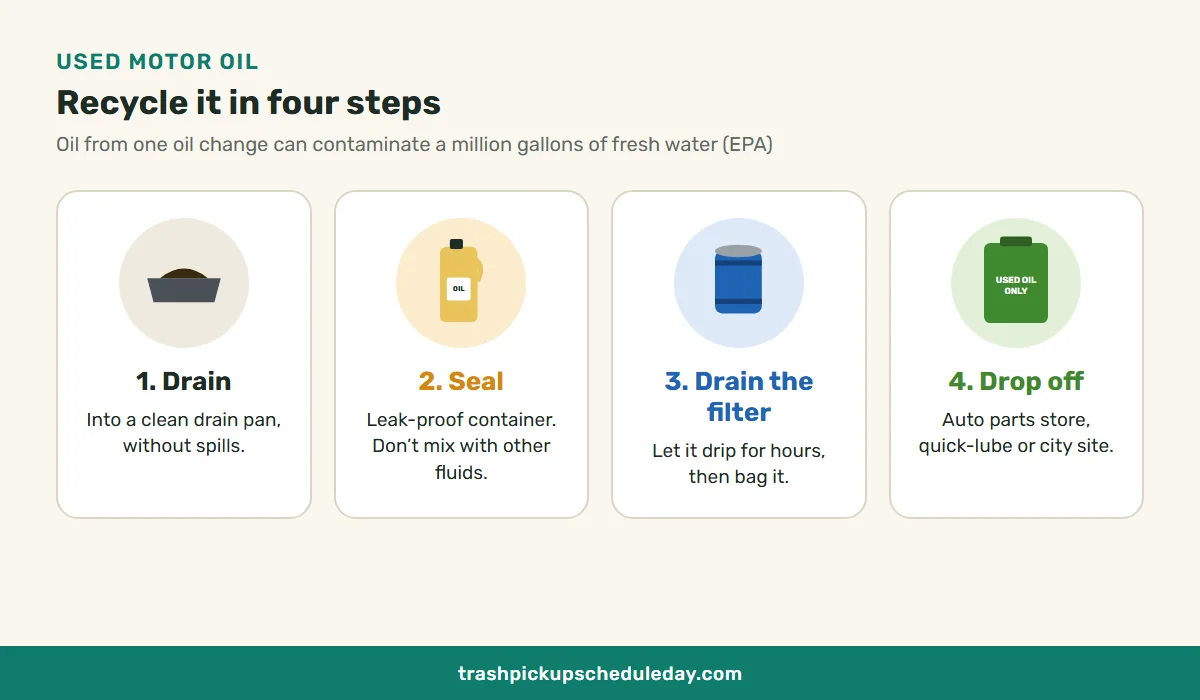
The EPA says used oil from one oil change can contaminate one million gallons of fresh water, about a year’s supply for 50 people. Recycled, the same oil is valuable. It can be re-refined into new lubricating oil or processed into fuel. The EPA notes that one gallon of used motor oil provides the same 2.5 quarts of lubricating oil as 42 gallons of crude oil.
Motor oil recycling: where to take used oil
- Auto parts stores. Many national chains accept used oil from DIYers at the counter or in a collection tank, often up to a few gallons per visit. Call ahead: limits and participation vary by store and state.
- Quick-lube shops and service stations. Many accept small amounts from the public.
- City or county collection sites. Recycling centers, transfer stations and household hazardous waste programs commonly have used oil tanks.
- Curbside used oil pickup. A few cities and haulers collect oil set out in a special container next to your recycling. If yours does, follow its container rules exactly.
The EPA suggests checking with local auto maintenance facilities, waste collectors and government waste officials, and using locators such as Earth911 or the American Petroleum Institute’s recycleoil.org to find a site.
How to collect and transport it
- Drain into a clean drain pan, and avoid spills.
- Pour into a leak-proof container with a tight lid. The original oil bottles or a dedicated oil jug work well. Don’t use containers that held food, drinks, chemicals or bleach.
- Keep it pure. Don’t mix used oil with antifreeze, gasoline, solvents, brake fluid or water. Mixed oil may be refused, because it can’t be recycled the same way.
- Label it “used motor oil,” and keep it upright and out of reach of children and pets.
- Transport it upright in the trunk, on a tray or in a box in case of leaks.
Don’t forget the oil filter
A used filter holds oil too. The EPA says to drain and recycle used oil filters, and that you can usually drop them off at the same collection centers. To drain it:
- Punch a hole in the dome end, or remove the filter while it’s warm, and let it drain into the pan for several hours (12 hours or more is common advice).
- Put the drained filter in a sealed plastic bag.
- Drop it off with your oil, or ask the collection site.
Other car fluids
| Fluid | Recyclable? | Where it usually goes |
|---|---|---|
| Used motor oil | Yes | Auto parts store, quick-lube, city drop-off |
| Oil filters | Yes, drained | Same as oil, where accepted |
| Antifreeze (coolant) | Often yes | Separate container. HHW program or some auto shops |
| Transmission and gear oil | Often accepted with motor oil | Ask the site first |
| Brake fluid, gasoline | Hazardous | HHW program |
| Oily rags, absorbent | Depends | Ask your HHW program. Never in recycling |
| Car batteries | Yes | Back to the retailer or HHW. See battery recycling |
What not to do with used oil
- Don’t pour it on the ground, in the street or down a storm drain. Storm drains usually go straight to creeks and rivers.
- Don’t put it in the trash. Even in a closed bottle, it can leak in the truck or landfill.
- Don’t put it in your recycling cart. Oil and oil bottles contaminate other recyclables. See common recycling mistakes.
- Don’t use it as weed killer or dust control. It’s a pollutant, not a treatment.
Empty motor oil bottles still hold residue, so most curbside programs don’t want them. Drain them into your used oil container and ask the collection site whether it takes the empty bottles.
Pingback: Household Hazardous Waste Pickup Day: Find Drop-Off Near You