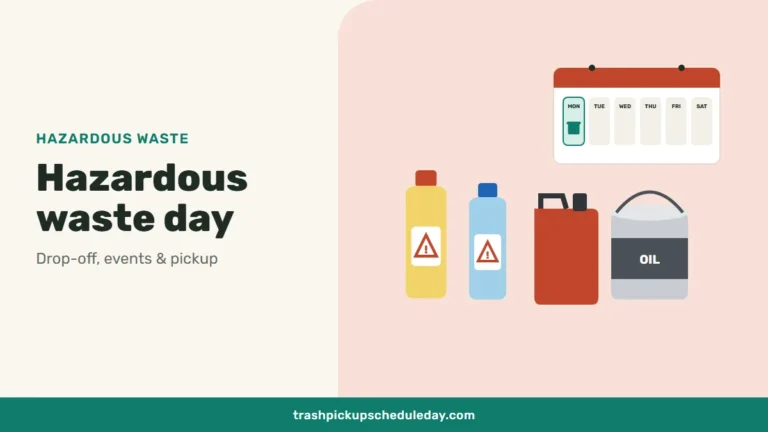
Household hazardous waste (HHW) is the leftover stuff under your sink and in your garage that can catch fire, react, explode, corrode or poison: pesticides, solvents, pool chemicals, motor oil, oil-based paint, many cleaners and some batteries. It can’t go in your trash or recycling cart. Most communities collect it in one of three ways: a permanent drop-off facility, scheduled collection days, or, in a few places, pickup at your home by appointment.
To find yours, search “[your county] household hazardous waste,” or use the Earth911 search with your ZIP code. Below: what qualifies, how each collection model works, and how to pack it safely.
What counts as household hazardous waste
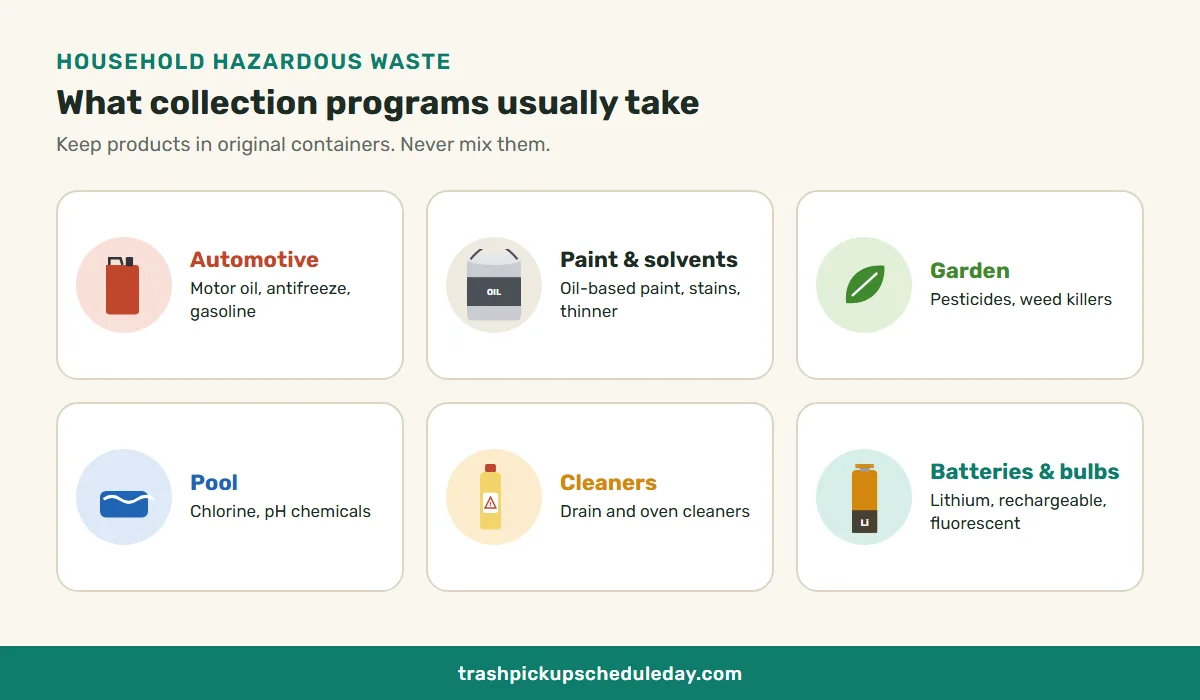
The EPA describes household hazardous waste as leftover household products that can catch fire, react or explode under certain circumstances, or that are corrosive or toxic. It names paints, cleaners, oils, batteries and pesticides as examples. In practice, collection programs usually take:
| Category | Examples |
|---|---|
| Automotive | Motor oil, antifreeze, brake fluid, gasoline, used oil filters |
| Paint and finishes | Oil-based paint, stains, varnish, paint thinner, solvents |
| Garden | Pesticides, herbicides, fertilizers containing weed killer |
| Pool and spa | Chlorine tablets, pH chemicals |
| Household cleaners | Drain openers, oven cleaners, bleach, ammonia-based products |
| Other | Fluorescent bulbs, mercury thermometers, propane cylinders, lithium and rechargeable batteries |
Programs usually don’t take explosives, ammunition, fireworks, medical sharps, prescription drugs, radioactive items, business or commercial waste, or large quantities from contractors. Those have separate routes, often through the police, pharmacies or licensed companies.
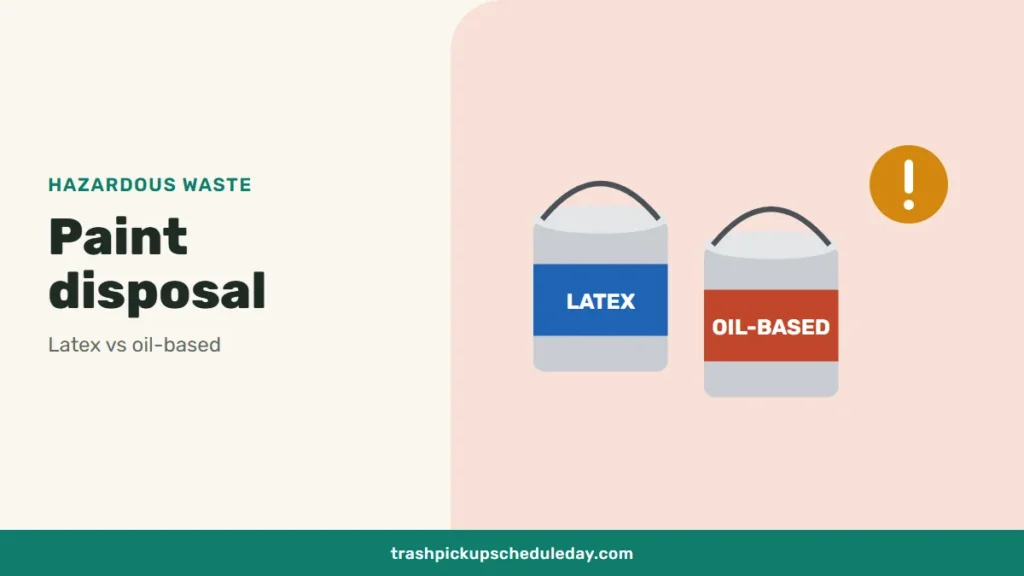
Some things people expect to be hazardous often aren’t handled by HHW programs. Latex paint is a common example. Many places tell you to dry it and trash it instead. Our paint disposal guide explains the difference. Alkaline batteries are allowed in the trash in most states. Lithium-ion and rechargeable ones aren’t. See battery recycling.
The three ways HHW is collected
Permanent drop-off facility
Larger cities and counties run year-round sites, often at a transfer station or public works yard. They’re usually free for residents with proof of address, sometimes by appointment, and open a few days a week. This is the most convenient option if you have one nearby.
Collection days
Smaller communities hold one-day events, often in spring and fall, in a parking lot or public works yard. You drive through, stay in your car, and staff unload your trunk. Dates are posted on the county or city solid waste page and often fill up, so registration may be required. Bring proof of residence.
Pickup at home
A few cities and private haulers offer door-to-door HHW collection for seniors, people with disabilities or everyone, usually by request and sometimes for a fee. If your trash is handled by a private hauler, ask whether they offer it. This is the only true “hazardous waste pickup” for most residents.
How to find a hazardous waste day near you
- Search your county first. HHW is often a county service even when trash is a city service. Try “[county] HHW,” “[county] household hazardous waste,” or “[city] chemical collection day.”
- Check your trash provider’s page. City sanitation departments and haulers often list drop-off centers. Philadelphia, for instance, takes bulbs and lithium, rechargeable and lead-acid batteries at its sanitation convenience centers.
- Use a locator. Earth911 lists HHW sites by ZIP code. The EPA also suggests contacting your local environmental, health or solid waste agency.
- Confirm the details. Accepted items, quantity limits (often a set number of gallons or pounds per visit), proof of residence and whether you need an appointment.
How to pack hazardous waste for the trip
The EPA’s own handling tips are a good baseline:
- Keep products in their original containers with labels on. Staff need to know what’s inside. Never store chemicals in food or drink containers.
- Never mix products to “consolidate” them. Some combinations, like bleach and ammonia, react dangerously.
- Tighten lids and stand containers upright in a sturdy box lined with a plastic bag or old towel, so leaks stay contained.
- Tape battery terminals or bag batteries individually.
- Put the box in the trunk or truck bed, not the passenger area, and drive straight there. Don’t leave chemicals in a hot car.
- Leaking or unlabeled container? Call the program first. Many have special instructions.
Why it can’t go in the trash
Hazardous products can start fires in garbage trucks, injure sanitation workers, and leak into soil and groundwater from landfills. Pouring them down sinks or storm drains sends them straight to treatment plants or waterways. Crews will usually leave hazardous items behind at the curb, and in some cities you can be fined for setting them out. If your cart was skipped because of something in it, see why trash isn’t picked up.
Buy less, store it safely
The easiest hazardous waste to deal with is the kind you never buy. Buy the size you need, and choose less toxic products where they do the job. Keep what’s left in a cool, ventilated spot out of reach of children and pets. When you have enough for a trip, combine it with other drop-offs, such as electronics recycling.
Pingback: Battery Recycling: How to Dispose of Batteries Safely by Type
Pingback: Medication Disposal: Take-Back Days, Drop Boxes and Safe Options
Pingback: Complete U.S. Trash Pickup Guide 2026 – Everything You Need to Know
Pingback: Motor Oil Recycling: Where to Drop Off Used Oil and Filters