Last updated: October 2026 | Reviewed by Fran A., Founder & Editor-in-Chief
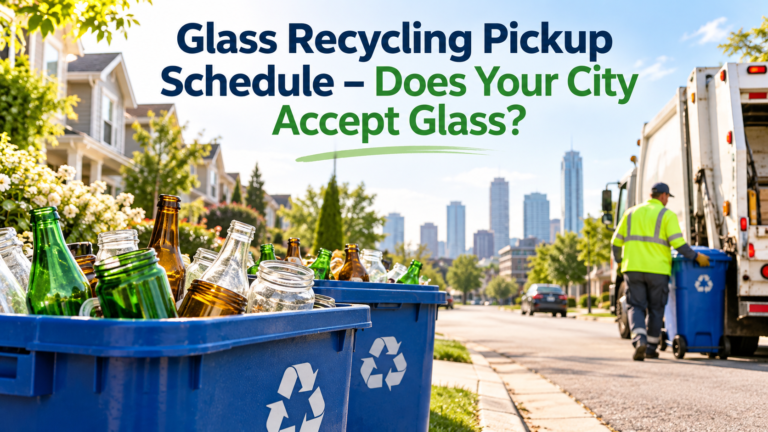
Glass is one of the most confusing materials in American recycling. In one city, wine bottles and pasta sauce jars go straight into the blue bin. Drive an hour away, and putting glass in that same bin counts as contamination.
This guide explains how glass recycling pickup works in the U.S., which major cities accept glass curbside, which ones use drop-off sites instead, and how to find the glass recycling pickup schedule for your address.
⚠️ Quick Answer
Does your city pick up glass? Most large U.S. cities still accept glass bottles and jars curbside — but not all. Some cities have moved glass to drop-off sites, and a few collect it in a separate glass-only bin.
When is glass picked up? In cities that accept it curbside, glass goes out on your regular recycling day — same bin, same truck (or a separate glass bin on the same day).
What glass is accepted? Only food and beverage bottles and jars. Never window glass, mirrors, drinking glasses, light bulbs, ceramics, or Pyrex.
How to check: Search “[your city] glass recycling” or check your city’s accepted materials list. Rules can change — the city’s official site is always the final word.
Why Glass Recycling Varies So Much
Glass is endlessly recyclable in theory — a bottle can be melted and remade into a new bottle without losing quality. In practice, curbside glass is one of the hardest materials for U.S. recycling programs to handle:
It breaks. In single-stream recycling, glass shatters in the truck and at the sorting facility. The shards contaminate paper and cardboard, lowering their value.
It wears out machinery. Broken glass is abrasive and damages sorting equipment.
It’s heavy and low-value. Glass weighs a lot, which makes it expensive to transport, and in many regions there’s no nearby processor that turns it back into bottles.
Mixed glass is hard to remake into bottles. Glass must be sorted by color (clear, green, brown) and cleaned of contaminants. Glass that’s been crushed together with everything else in a single-stream bin is often used for lower-value purposes, such as landfill cover or construction fill, instead of new bottles.
Because of these costs, some cities have dropped glass from curbside programs — while others have invested in separate glass collection or better processing. That’s why your answer depends entirely on where you live.
The 3 Ways U.S. Cities Collect Glass
1. Curbside Glass in the Regular Recycling Bin (Most Common)
Glass bottles and jars go into the same single-stream recycling bin as paper, plastic, and cans. They’re picked up on your normal recycling day.
Your glass recycling pickup schedule = your recycling schedule. If recycling is weekly, glass is weekly. If recycling is every other week, glass is every other week.
👉 Related: Is Trash Pickup Every Week or Every Two Weeks?
2. Separate Glass-Only Bin
Some cities ask residents to keep glass out of the main recycling bin and put it in a smaller, separate glass bin. This keeps broken glass from contaminating paper and produces cleaner glass that can be remade into new bottles.
Portland, Oregon is the best-known example: paper, plastic, and metal go in the blue bin, while glass always goes in a separate glass-only bin. The glass bin is set out alongside your other recycling.
3. Drop-Off Only (No Curbside Glass)
In these cities, glass is not accepted curbside at all. Residents take bottles and jars to community drop-off containers — often at fire stations, parks, recreation centers, or city facilities.
Tucson, Arizona is an example: the city removed glass from its curbside blue barrels in 2021 and now collects glass at drop-off sites around the city, where it’s crushed and reused locally.
Important: If your city is drop-off only, putting glass in your curbside bin counts as contamination — even though glass is technically recyclable.
Glass Recycling by City – Major U.S. Cities
The table below reflects each city’s publicly stated policy at our last check. Recycling programs change — always confirm with your city before relying on this list.
| City | Glass Accepted Curbside? | How It Works |
|---|---|---|
| New York City, NY | ✅ Yes | Goes in the metal, glass & plastic recycling stream (kept separate from paper) |
| Los Angeles, CA | ✅ Yes | Glass bottles and jars in the blue bin |
| Houston, TX | ✅ Yes | Returned to curbside in 2019 after a three-year pause; drop-off depots also accept glass |
| Dallas, TX | ✅ Yes | Bottles and jars of any color in the blue cart; contain any broken bottle glass in a paper bag |
| Phoenix, AZ | ✅ Yes | Glass bottles and jars in the blue barrel |
| Denver, CO | ✅ Yes | Food and beverage glass in the purple recycling cart |
| Las Vegas Valley, NV | ✅ Yes | Clear, green, and brown bottles and jars accepted by Republic Services |
| Portland, OR | 🔶 Separate bin | Glass never goes in the blue bin — use the glass-only bin |
| Tucson, AZ | ❌ Drop-off only | Removed from curbside in 2021; take glass to city drop-off sites |
Suburbs can differ from the big city next door. In the Phoenix area, for example, neighboring cities have had different glass rules from Phoenix itself — some accepting only beverage bottles, some accepting no glass at all. If you live in a suburb, check your own city, not the nearest big city.
City Guides
- Trash Pickup Schedule in New York City, NY – 2026 Guide
- Los Angeles Trash Collection Calendar 2026
- Las Vegas Solid Waste Pickup Schedule 2026
- Philadelphia Garbage Collection Days 2026
What Glass Can Be Recycled?
✅ Accepted (in cities that take glass)
- Beverage bottles: beer, wine, soda, juice, kombucha
- Food jars: pasta sauce, pickles, jam, baby food, salsa
- Condiment bottles: ketchup, salad dressing, hot sauce
- Glass bottles and jars in clear, green, and brown
❌ Never Accepted in Glass Recycling
These items are a different type of glass with a different melting point. Even a small amount can ruin a batch of recycled bottle glass.
- Window glass and plate glass
- Mirrors
- Drinking glasses and stemware
- Pyrex and other heat-resistant cookware
- Light bulbs (some types need hazardous waste disposal)
- Ceramics, porcelain, and dishes
- Fiberglass
- Car windshields
- Glass that contained hazardous products
What to do with non-recyclable glass: Wrap broken window glass, mirrors, or drinking glasses securely (paper bag or cardboard box), label it “broken glass” if your city recommends it, and put it in the regular trash. Fluorescent and CFL bulbs contain mercury and should go to a hazardous waste drop-off.
👉 Related: Hazardous Waste Pickup Day Near Me – 2026 Schedule
How to Prepare Glass for Recycling
1. Empty it. No liquid or food left inside.
2. Give it a quick rinse. It doesn’t need to be spotless.
3. Labels can stay on. Most programs remove them during processing.
4. Check lids and caps. Some programs want metal lids left on, others want them removed and recycled separately. Follow your city’s instructions.
5. Don’t break it on purpose. Whole bottles are easier to sort and safer for workers.
6. Don’t bag it. Place glass loose in the bin unless your city says otherwise.
7. If a bottle breaks, follow your city’s rule. Some ask you to contain broken bottle glass in a paper bag before recycling; others say broken glass goes in the trash.
👉 Related: How to Sort Trash for Recycling: A Visual City-by-City Guide
Bottle Deposit States – Return Glass for Cash
Ten states have container deposit laws: California, Connecticut, Hawaii, Iowa, Maine, Massachusetts, Michigan, New York, Oregon, and Vermont.
In these states, many glass beverage bottles carry a deposit (typically 5–10 cents) that you get back when you return them to a redemption center or participating store. Which bottles qualify depends on the state — wine and liquor bottles, for example, are excluded in some states.
Why it matters: Deposit programs collect glass separately and keep it cleaner, which makes it much more likely to be remade into new bottles. If you live in a deposit state, returning eligible bottles is usually the best option.
What to Do If Your City Doesn’t Pick Up Glass
1. Find a glass drop-off site. Cities without curbside glass usually operate community drop-off containers. Search “[your city] glass drop-off.”
2. Check private glass collection services. In some cities, private companies offer subscription glass pickup for homes and businesses.
3. Use bottle deposit return if you’re in a deposit state.
4. Reuse glass jars. Jars work well for food storage, leftovers, and organizing.
5. If no option exists, glass goes in the trash — not the recycling bin. Putting glass in a bin that doesn’t accept it contaminates the whole load.
How to Find Your Glass Recycling Pickup Schedule
Step 1 – Confirm your city accepts glass curbside. Check your city’s or hauler’s accepted materials list.
Step 2 – Find your recycling day. Use your city’s address lookup tool or call 311. In cities that accept glass curbside, glass is collected on your recycling day.
👉 Related: How to Find My Trash Pickup Zone in Any U.S. City
Step 3 – Check the frequency. Recycling (and therefore glass) may be weekly or every other week.
Step 4 – Check for holiday changes. Holiday weeks shift recycling the same way they shift trash.
👉 Related: Holiday Week Trash Schedule 2026 – All Changes in One Place
Frequently Asked Questions
Is glass picked up with regular recycling?
In most U.S. cities that accept glass curbside, yes — glass bottles and jars go in your regular recycling bin and are picked up on your recycling day. A few cities, such as Portland, Oregon, use a separate glass-only bin.
Why doesn’t my city recycle glass curbside?
Usually cost. Glass breaks in single-stream collection, contaminates paper, wears out equipment, and is heavy to transport. Some cities have moved glass to drop-off sites to keep it cleaner and cut processing costs.
Can I put broken glass in the recycling bin?
It depends on the type and your city. Broken window glass, mirrors, and drinking glasses never go in recycling. For broken bottle glass, some cities ask you to contain it in a paper bag in the recycling bin, while others say it goes in the trash. Follow your city’s rule.
Do I need to remove labels from glass bottles?
No. Labels are removed during processing in most programs.
Can drinking glasses or Pyrex be recycled?
No. They’re made from a different type of glass that melts at a different temperature and can ruin a batch of recycled bottle glass.
Is glass recycling pickup weekly?
It matches your recycling schedule. If your city collects recycling weekly, glass is weekly; if recycling is every other week, glass is too.
Are wine bottles recyclable?
Yes, in cities that accept glass. In deposit states, check whether wine bottles qualify for a refund — many states exclude them.
Related Recycling Guides
- What Goes in Recycling Bin USA? Complete Curbside Guide 2026
- Plastic Recycling Numbers Accepted Curbside – #1 to #7 Explained
- How to Sort Trash for Recycling: A Visual City-by-City Guide
- Single-Stream Recycling vs Sorted Recycling: What’s Your City?
- Cardboard Recycling Day Near Me – How to Prepare & Schedule
- Complete U.S. Trash Pickup Guide 2026 – Everything You Need to Know
City glass policies reflect publicly available information at our last review (October 2026). Recycling programs change — always confirm with your city or hauler. If you notice an error, contact us and we’ll review it within 48 hours.
Written and maintained by Fran A., Founder & Editor-in-Chief — trashpickupscheduleday.com