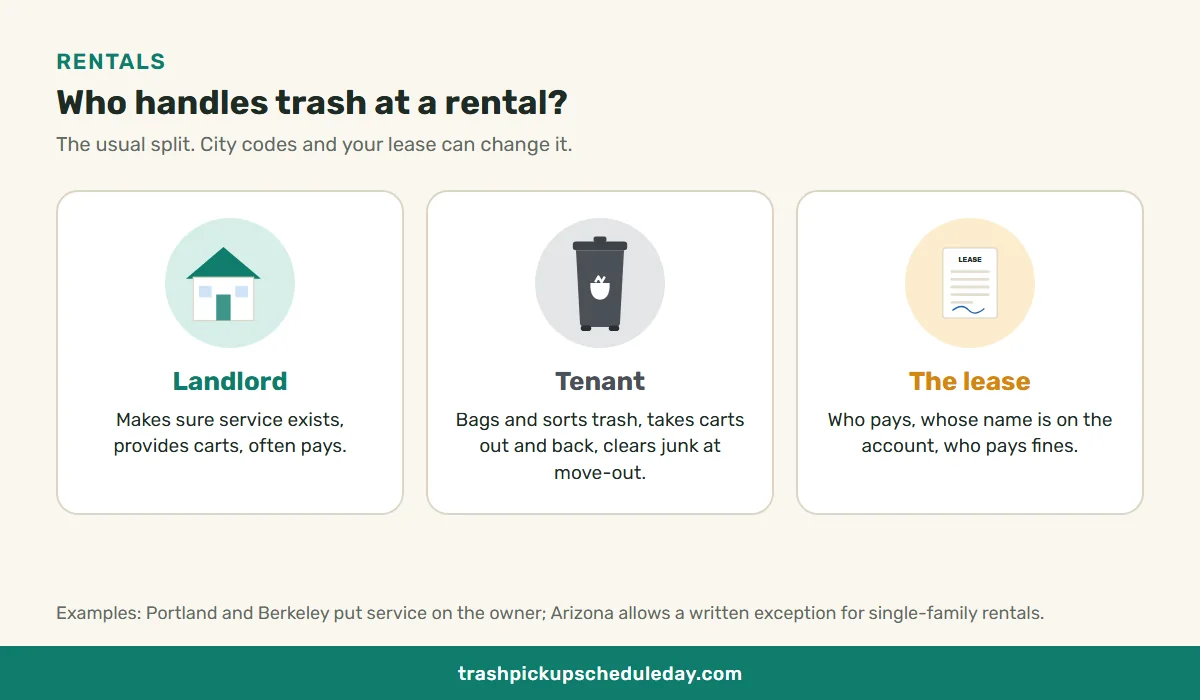
In most U.S. cities, the landlord is responsible for trash service existing at a rental. The landlord sets it up, pays for it or passes the cost on, and provides containers. The tenant is usually responsible for the day-to-day part: bagging trash, sorting recycling, and getting carts to the curb and back. But it depends on where you live. Some city codes and state laws put the service itself on the tenant, especially in single-family rentals, and your lease can fill in the details.
Here’s how the split usually works, real examples of the rules, and what to check before you sign.
When is the landlord responsible for trash?
| Task | Usually the landlord | Usually the tenant |
|---|---|---|
| Making sure service exists | ✔ | |
| Paying for service | ✔ (may pass on the cost) | Sometimes, if the lease or law says so |
| Providing carts or dumpsters | ✔ | |
| Bagging trash, sorting recycling | ✔ | |
| Taking carts to the curb and back | ✔ (houses) | |
| Keeping shared trash areas clean | ✔ (apartments) | Use them properly |
| Bulk items when moving out | ✔ | |
| Fines for building-wide violations | ✔ (often, by law) | Can be charged back if the lease allows |
What city and state rules say: real examples
Portland, Oregon: the owner must pay
Portland requires owners of rentals with four or fewer units to set up and pay for garbage, recycling and compost service, with bills in the owner’s name, not the tenants’. The city sets minimum cart sizes by building type, such as one 20-gallon garbage cart for a single-family house. Its code neither requires nor prohibits landlords from recovering the cost from tenants. Owners without service face monthly penalties.
Berkeley, California: owners can be cited
Berkeley says property owners are responsible for setting up waste collection for their tenants in multi-family buildings, and can be cited and fined for lack of required service. Landlords must also give tenants information on how to use the service at move-in, at move-out and once a year.
Arizona: landlord by default, but a single-family exception
Arizona’s landlord-tenant law requires landlords to provide trash receptacles and arrange for removal. For a single-family residence, though, the landlord and tenant can agree in writing, with adequate consideration such as reduced rent, that the tenant takes over that duty (A.R.S. 33-1324).
Other cities: owner, tenant or both
Some municipal codes say the owner stays legally responsible for trash service no matter what the lease says. Others, mostly smaller towns, require the occupant of each rental unit to arrange service. Search your city’s municipal code for “refuse,” “garbage” or “rental dwelling” to find yours.
Houses vs apartments
- Single-family rentals: service is often in the owner’s name with the city or utility. In some places it’s in the tenant’s name, through the water or utility account. Tenants almost always handle curbside set-out. If you’re the one opening the account, our new resident guide walks through it.
- Apartments: the building usually has a dumpster, compactor or chute contract paid by the owner, sometimes with a separate trash or “valet trash” fee on your rent statement. Recycling rules for apartments can differ from houses.
What to check in your lease
- Who pays for trash service, and whether it’s included in rent or billed separately.
- Whose name the account is in, if the tenant pays.
- Who handles carts, including curbside set-out and bringing them back in.
- Fines: can the landlord pass on city fines for early set-out, overflowing bins or bulk items?
- Move-out: what happens to items left behind, and what cleanup is charged against the deposit.
Not in the lease? Ask in writing before you sign.
Common disputes, and who usually wins
- Overflowing cart every week: if the cart the landlord provides is too small for the household, many cities let you upgrade. Who pays is a lease question. See how much trash you can put out per week.
- Fines for set-out timing: usually the person who controls the cart. Know your city’s set-out times.
- Junk left at move-out: generally the departing tenant’s responsibility, and a common deposit deduction. Our moving out checklist helps avoid it.
- No service at all: in most cities the landlord is responsible for trash service, so that’s on the owner. Contact the landlord in writing, then your city’s code enforcement or 311 if it isn’t fixed.
This article is general information, not legal advice. For a specific dispute, check your lease, your city code and your state’s landlord-tenant law, or contact a local tenant rights organization.