Last updated: October 2026 | Reviewed by Fran A., Founder & Editor-in-Chief
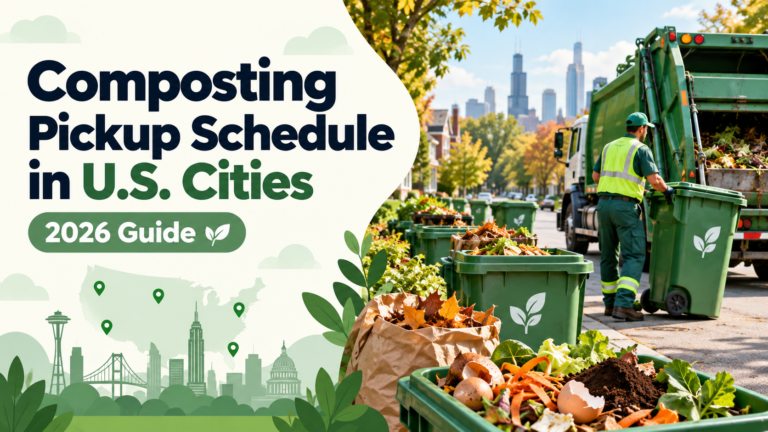
Curbside composting has grown quickly across the United States. A few years ago, only a handful of cities picked up food scraps at the curb. Today, some of the largest cities in the country — including New York City, Los Angeles, and Denver — collect food scraps alongside yard waste, and some make it mandatory.
This guide explains how compost pickup schedules work, which major U.S. cities offer curbside composting in 2026, what goes in the compost bin, and what to do if your city doesn’t offer pickup yet.
⚠️ Quick Answer
When is compost picked up? In most cities that offer it, compost is collected weekly, usually on the same day as your trash or recycling. Check your city’s address lookup tool to confirm.
What goes in the compost bin? Food scraps, food-soiled paper, and yard trimmings. Many city programs also accept meat, bones, and dairy — items you shouldn’t put in a backyard compost pile.
What never goes in? Plastic bags (including most “compostable” bags unless your city allows them), pet waste, diapers, foam, and plastic packaging.
No curbside program? Look for food scrap drop-off sites, private compost pickup services, or backyard composting.
How Compost Pickup Schedules Work
Curbside compost — also called organics collection, green bin, or food scrap collection — is picked up in a dedicated cart, separate from trash and recycling.
Typical Schedule
- Frequency: Weekly in most programs. Because food scraps decompose and attract pests, compost is rarely collected less than once a week.
- Day: Usually the same day as your trash or recycling.
- Cart: Often green or brown, depending on the city.
Food Scraps vs. Yard Waste
Some cities collect food and yard waste together in one cart. Others collect only yard waste curbside and handle food scraps separately — or not at all. Before using your green cart for food, confirm that your city’s program accepts food scraps.
👉 Related: Yard Waste Pickup Schedule – Leaves, Grass & Branches by City
How to Find Your Compost Pickup Day
- City address lookup tool — search “[your city] trash recycling compost schedule”
- City 311 app or line — ask whether your address has compost service and which day it’s collected
- Your hauler’s website — if a private company collects your waste
👉 Related: How to Find My Trash Pickup Zone in Any U.S. City
Curbside Composting in Major U.S. Cities
The table below reflects each city’s published program at our last check (October 2026). Programs expand and change often — always confirm with your city.
| City | Curbside Food Scrap Pickup? | Key Details |
|---|---|---|
| New York City, NY | ✅ Yes — citywide, mandatory | Rolled out citywide in October 2024; fines for not separating began April 1, 2025 |
| Los Angeles, CA | ✅ Yes — citywide | Food scraps and food-soiled paper go in the green bin with yard waste since January 2023 |
| San Francisco, CA | ✅ Yes — mandatory | Green bin for food scraps, food-soiled paper, and yard trimmings |
| Seattle, WA | ✅ Yes | Food and yard waste cart; food waste is not allowed in the garbage |
| Portland, OR | ✅ Yes | Green compost cart for food scraps and yard debris |
| Denver, CO | ✅ Yes — weekly | Compost carts available to all Denver Solid Waste Management customers (homes with 7 or fewer units) |
| Austin, TX | ✅ Yes — weekly | Green cart for single-family homes up to fourplexes; accepts meat, dairy, and bones |
| Chicago, IL | ❌ Drop-off only | City runs food scrap drop-off sites; no citywide curbside compost pickup |
City Notes
New York City. DSNY’s curbside composting is now required for all residents. Food scraps, yard waste, and food-soiled paper go in a brown bin or a labeled container with a secure lid. Fines for not separating compost range from $25 to $100 for buildings with 1–8 units and from $100 to $300 for buildings with 9 or more units. 👉 Trash Pickup Schedule in New York City, NY – 2026 Guide
Los Angeles. LA Sanitation launched citywide organics collection on January 16, 2023, adding food scraps and food-soiled paper to the green bin. The city provides kitchen pails for collecting scraps. 👉 Los Angeles Trash Collection Calendar 2026
California statewide. California’s SB 1383 requires jurisdictions to provide organic waste collection. If you live anywhere in California, your city likely accepts food scraps in its green bin — check local rules.
Denver. Since January 2025, Denver collects trash and compost weekly and recycling every other week. Compost service covers city customers in homes with seven or fewer units.
Austin. Austin Resource Recovery collects the green compost cart weekly. You can place extra yard trimmings next to the cart in paper lawn bags or reusable containers, but materials in plastic bags are treated as trash.
Chicago. Chicago offers food scrap drop-off locations run by the Department of Streets and Sanitation, but not citywide curbside compost collection.
👉 Related: San Francisco Trash & Recycling Pickup Schedule 2026 👉 Related: Portland OR Garbage & Recycling Pickup Schedule 2026
What Goes in the Compost Bin?
Exact rules vary by city, but most municipal programs follow the same general pattern.
✅ Generally Accepted
| Category | Examples |
|---|---|
| Fruits and vegetables | Peels, cores, rinds, scraps, spoiled produce |
| Grains and bread | Bread, pasta, rice, cereal, baked goods |
| Coffee and tea | Coffee grounds, paper coffee filters, tea bags without staples |
| Eggs and shells | Eggshells, leftover egg dishes |
| Food-soiled paper | Paper napkins, paper towels, uncoated paper plates, greasy pizza boxes (in many programs) |
| Yard trimmings | Leaves, grass clippings, plant trimmings, small branches |
⚠️ Accepted in Many City Programs (Not Backyard Piles)
Municipal composting facilities run hotter than home compost piles, so many city programs accept:
- Meat, poultry, and fish
- Bones and shells
- Dairy products
- Cooked and prepared foods
Check your city’s list — not every program accepts these.
❌ Not Accepted
- Plastic bags and plastic wrap
- “Compostable” plastic bags, cups, and cutlery — unless your city specifically allows them
- Pet waste and cat litter
- Diapers and hygiene products
- Foam (Styrofoam) containers
- Coated paper cups and wax-coated cardboard
- Produce stickers, rubber bands, and twist ties
- Liquids, grease, and cooking oil in large quantities
- Treated or painted wood
How to Compost at Home for Curbside Pickup
1. Use a kitchen pail. A small countertop container with a lid makes it easy to collect scraps while cooking. Some cities provide one for free.
2. Line it with paper, not plastic. Newspaper or a paper bag absorbs moisture and goes in the compost bin with the scraps. Use compostable bags only if your city accepts them.
3. Empty it often. Dump the pail into your outdoor cart every day or two to prevent odors and fruit flies.
4. Freeze scraps in summer. Storing scraps in the freezer until collection day reduces odors and pests.
5. Layer wet and dry. Add yard waste, paper towels, or shredded paper between layers of food scraps to absorb moisture.
6. Keep the lid closed. A closed lid keeps out animals and rain.
7. Rinse the cart occasionally. A quick rinse with water and a little baking soda keeps it fresh.
What If Your City Doesn’t Offer Compost Pickup?
Option 1 – Food Scrap Drop-Off Sites
Many cities, counties, and community gardens run drop-off locations for food scraps. Search “[your city] food scrap drop-off.”
Option 2 – Private Compost Pickup Services
In many metro areas, private companies offer weekly or bi-weekly compost pickup for a monthly fee. They typically provide a bucket and swap it on pickup day.
Option 3 – Backyard Composting
If you have outdoor space, a backyard bin or tumbler handles fruit, vegetable scraps, coffee grounds, eggshells, and yard waste. Avoid meat, dairy, and oils in home compost — they attract pests.
Option 4 – Community Gardens
Some community gardens accept food scraps from neighbors. Check what they accept before dropping off.
Why Composting Matters
Food scraps and yard waste make up a large share of what American households throw away. In a landfill, organic material breaks down without oxygen and produces methane, a powerful greenhouse gas.
Composting turns the same material into a nutrient-rich soil amendment used in landscaping, agriculture, and parks. It also keeps heavy, wet food waste out of trash carts, which reduces odors and pests.
Frequently Asked Questions
How often is compost picked up?
In most U.S. cities that offer curbside composting, compost is collected weekly — often on the same day as trash or recycling.
Can I put meat and bones in my compost bin?
In many city programs, yes, because municipal facilities compost at high temperatures. Never put meat or bones in a backyard compost pile.
Can I use compostable plastic bags?
Only if your city accepts them. Many programs reject them because they don’t break down fast enough. Paper bags or newspaper are a safer choice.
Is composting mandatory?
In some cities, yes. New York City requires residents to separate compost and began issuing fines in April 2025. San Francisco has mandatory composting, and Seattle doesn’t allow food waste in the garbage. In California, state law requires organics collection programs.
Does Chicago have curbside compost pickup?
Not citywide. Chicago runs food scrap drop-off locations, but no citywide curbside compost collection.
Can pizza boxes go in the compost bin?
In many city programs, yes — greasy pizza boxes are accepted as food-soiled paper. Check your city’s list.
What if my city doesn’t offer composting?
Use a food scrap drop-off site, a private compost pickup service, a community garden, or a backyard compost bin.
Does compost pickup change on holidays?
Usually yes — compost follows the same holiday delay schedule as trash in most cities. 👉 Holiday Week Trash Schedule 2026 – All Changes in One Place
Related Guides
- Yard Waste Pickup Schedule – Leaves, Grass & Branches by City
- San Francisco Trash & Recycling Pickup Schedule 2026
- Portland OR Garbage & Recycling Pickup Schedule 2026
- What Goes in Recycling Bin USA? Complete Curbside Guide 2026
- Is Trash Pickup Every Week or Every Two Weeks?
- Complete U.S. Trash Pickup Guide 2026 – Everything You Need to Know
City composting programs reflect publicly available information at our last review (October 2026). Programs expand and change — always confirm with your city or hauler. If you notice an error, contact us and we’ll review it within 48 hours.
Written and maintained by Fran A., Founder & Editor-in-Chief — trashpickupscheduleday.com