
For curbside tree branch disposal, most U.S. cities want branches cut to 4 feet or less, tied in bundles with string or twine, and light enough for one person to lift, typically 40 to 50 pounds. Small twigs and trimmings usually go in the yard waste cart. Limbs thicker than your city’s diameter limit, stumps and big storm piles need a special pickup or a drop-off site.
The exact limits vary by city, so check yours before you start cutting. Here’s how the rules usually look, and how to prepare branches so the crew takes them.
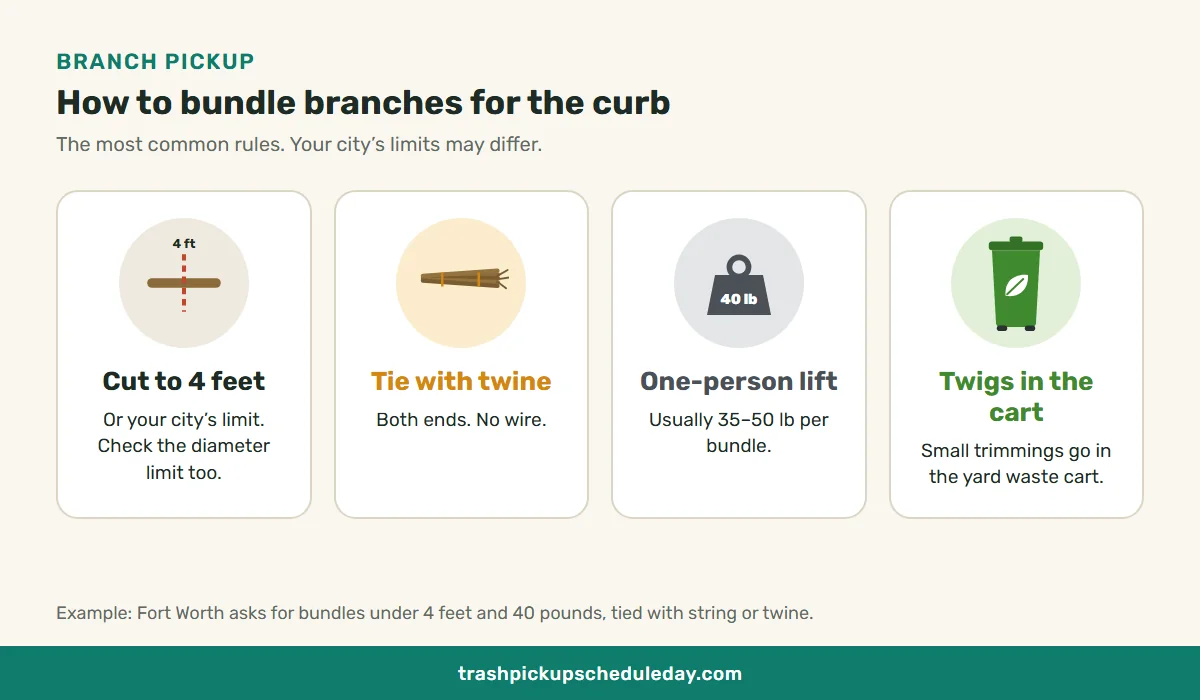
Typical tree branch disposal rules
| Rule | Common range | Example |
|---|---|---|
| Length | 4 feet maximum (a few cities allow 5–6 feet) | Fort Worth, TX: bundles no more than 4 feet |
| Branch diameter | About 2 to 6 inches, depending on the city | Varies a lot. Check your city |
| Bundle weight | Usually 35 to 50 pounds | Fort Worth: 40 pounds |
| Ties | String or twine. No wire, often no plastic tape | Fort Worth: string or twine |
| Number of bundles | Unlimited in some cities, capped in others | Fort Worth: no limit on tied bundles |
Fort Worth’s yard trimmings rules are a good example of the common pattern: crews pick up bundles by hand, so length and weight limits keep loads manageable.
How to prepare branches for the curb
- Cut to length. Use loppers or a pruning saw to get branches under your city’s limit, usually 4 feet.
- Strip or separate leaves if your city collects leaves differently. See our guide to leaf collection days.
- Bundle with twine. Tie at both ends so the bundle holds when lifted. Natural twine can go to composting with the branches. Wire and plastic can’t.
- Weigh it by feel. If you struggle to lift it with one hand, make it smaller.
- Small trimmings go in the cart. Twigs and clippings that fit go in your yard waste cart with the lid closed.
- Place bundles at the curb on the right day, away from cars, mailboxes and fire hydrants, and not in the street or on the sidewalk.
Yard waste cart vs bundles vs bulk brush
Cities usually handle branches in one of three ways:
- Yard waste cart only. Branches must fit in the cart, and anything bigger needs a drop-off or special pickup.
- Cart plus bundles. The common model: bundles go next to the cart on yard waste day.
- Bulk brush collection. Some cities collect large piles of loose brush on a separate monthly or seasonal schedule, often with a size limit for the whole pile.
If yard waste and trash have different rules where you live, our comparison of yard waste vs regular trash and the guide to yard waste pickup rules explain the differences.
Tree branch disposal for large limbs, stumps and storm debris
- Thick limbs and logs: cut to firewood length and offer them free to neighbors, or take them to a yard waste drop-off site. Many cities don’t collect logs thicker than their limit.
- Stumps and root balls: almost never collected curbside. A tree service or a landfill or transfer station that accepts them is the usual route.
- After storms: cities often announce special debris collection, with separate piles for vegetation and construction debris. Wait for your city’s instructions before stacking huge piles at the curb.
- Tree removal by a contractor: the contractor normally hauls away the wood. Confirm it’s in the quote.
Don’t burn branches without checking the rules
Open burning of yard waste is banned or restricted in many cities and counties, and fire-risk days can bring total bans. Check with your local fire department before burning anything. Chipping branches into mulch or composting small twigs are easier and allowed almost everywhere.
Why branch bundles get left behind
The usual reasons: bundles too long or too heavy, tied with wire, mixed with lumber or trash, placed out on the wrong day, or limbs over the diameter limit. If you followed your city’s rules and they were still missed, report it quickly. Fort Worth, for example, asks residents to report missed collections within 24 hours of the pickup day. See what to do if trash was never picked up.
Pingback: Leaf Collection Days Near Me: How Fall 2026 Pickup Works