
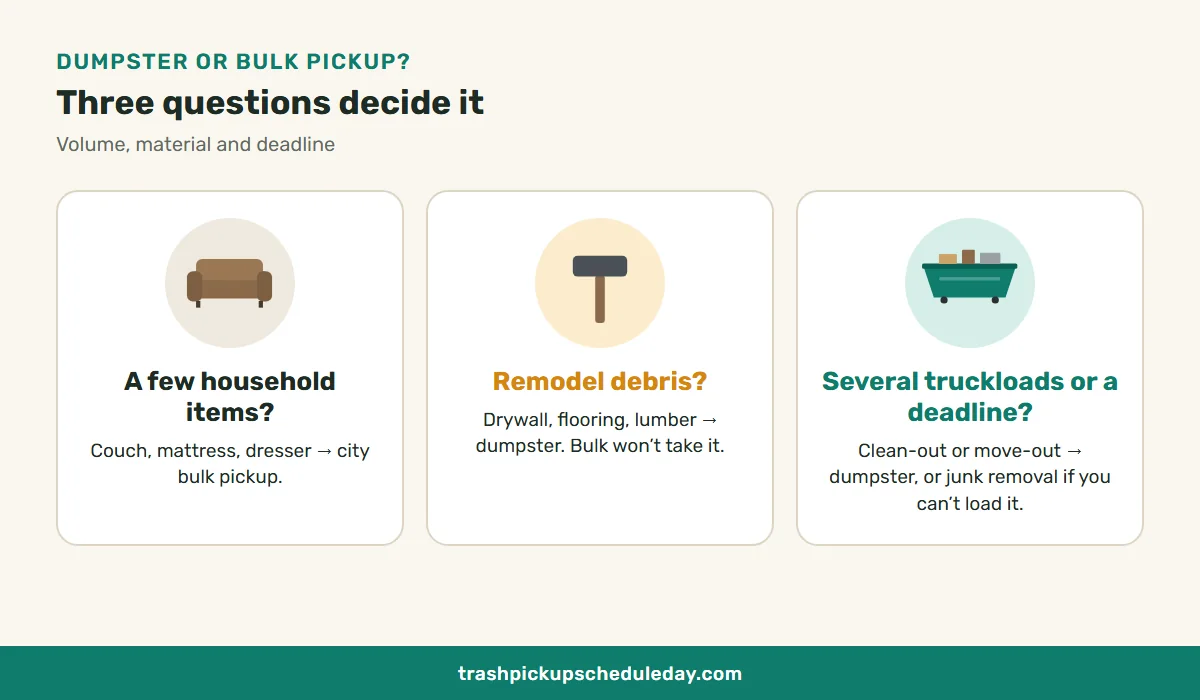
Choosing between dumpster rental vs bulk pickup usually comes down to volume and material. City bulk pickup is the right choice for a handful of household items like a couch, a mattress or an old dresser. It’s often free or cheap, but limited in what and how much it takes. A rental dumpster makes sense when you have more than a few truckloads, need everything gone in one go, or are throwing out remodeling debris that bulk pickup won’t accept.
Here’s how they compare, and a quick way to decide for your project.
Side-by-side comparison
| City bulk pickup | Roll-off dumpster rental | |
|---|---|---|
| Cost | Often included in your trash fee or a small per-item or per-pickup charge | You pay for the container, the haul and the disposal, usually a few hundred dollars and more for big or heavy loads |
| Volume | A few items per pickup, or a limited pile | Several pickup-truck loads in one container |
| Timing | Your bulk week, or a booked date that can be days or weeks away | Delivered in days, kept for about a week or more |
| Accepted items | Household furniture, mattresses, sometimes appliances | Most non-hazardous debris, including construction waste (with weight limits) |
| Not accepted | Construction debris, hazardous waste, often tires and heavy materials | Hazardous waste, paint, batteries, tires and other restricted items |
| Labor | You move items to the curb | You load the dumpster yourself |
| Permits | None | None on your driveway in most places. Street or sidewalk placement usually needs a city permit |
When bulk pickup is the better choice
Bulk pickup wins for routine household clear-outs: replacing a sofa, getting rid of a mattress, clearing a few pieces after a move. It costs little or nothing and doesn’t take up your driveway. Our guides on bulk trash pickup and what bulk items are typically accepted explain the rules, and free vs paid bulk pickup costs shows how fees work.
Watch the limits. Many cities cap the number of items per pickup or per week. Philadelphia, for example, limits mattresses and box springs to two a week. Some only collect on scheduled weeks. If you need more than one pickup, plan backward from your move-out or deadline. For mattresses specifically, see mattress disposal options.
When a dumpster is the better choice
A dumpster is worth paying for when:
- The volume is big. A whole-house or estate clean-out, a garage or basement full of years of stuff.
- It’s renovation debris. Drywall, flooring, cabinets, roofing and lumber are almost never accepted at the curb.
- You’re on a deadline. Closing on a house sale, ending a lease or a contractor schedule.
- You’d otherwise make many dump runs. One container can replace a weekend of trips to the transfer station.
Size, weight and rental period
Dumpster companies usually rent roll-off containers by the cubic yard. 10-, 20-, 30- and 40-yard sizes are common. Each price includes a weight allowance, and going over it costs extra per ton. Heavy materials like concrete, dirt, brick and shingles fill the weight limit long before the box looks full, so many companies require a smaller container or a special heavy-debris rate for them. A standard rental period is about a week, with daily fees after that.
Before you book, ask:
- What’s included: delivery, pickup, disposal, how many tons, how many days?
- What does each extra ton or day cost?
- Which materials are prohibited or charged extra (mattresses, tires, appliances, electronics)?
- Do I need a permit for where it will sit?
Permits and placement
If the dumpster fits on your driveway or private property, you usually don’t need a permit, though an HOA may have its own rules. Placing it on the street, sidewalk or alley generally requires a city permit, sometimes arranged by the dumpster company. Philadelphia, for instance, requires a Department of Streets permit for temporary construction dumpsters and a city license for other dumpsters on private property or the public right-of-way (see its dumpster license page). Put plywood under the container to protect the driveway surface.
Other options between the two
- Dumpster bags: a heavy-duty fabric bag you buy, fill and book for collection. They suit medium jobs and small driveways, but have weight and placement rules.
- Junk removal: a crew loads everything for you. It costs more per cubic yard than a dumpster, but there’s no labor and it’s done in an hour.
- Transfer station drop-off: cheapest if you own a truck or trailer and can make the trips.
- Donation pickup: charities sometimes collect usable furniture and appliances for free. Call ahead.
Dumpster rental vs bulk pickup: a quick way to decide
- Under about a pickup-truck load of household items, no deadline: bulk pickup.
- Household items over several weeks: bulk pickup, booked in batches.
- Renovation debris, or more than a few truckloads: dumpster rental.
- Tight deadline, lots of stuff, no time to load: junk removal.
Whatever you choose, keep hazardous items out of both. Paint, batteries, propane and chemicals need their own route. See paint disposal and battery recycling.
Pingback: What Happens If I Miss Trash Pickup Day? (Your Options Explained)