
Introduction
Recycling in the United States can be confusing. What’s accepted in one city may be rejected in another, recycling bins are often contaminated, and many people unknowingly place the wrong items in the wrong bin.
This guide explains how to recycle properly in the US, covering what materials are usually accepted, how recycling bins work, why bins get rejected, and how local rules affect recycling programs.
Table of Contents
How Recycling Works in the United States
Recycling in the US is managed at the local level, not nationally. Cities, counties, or private waste haulers decide:
- What materials are accepted
- How items are collected
- How contamination is handled
Most recycling programs rely on curbside pickup combined with sorting facilities known as materials recovery facilities (MRFs).
Why Recycling Rules Vary by City
Recycling rules vary because of:
- Local recycling infrastructure
- Processing costs
- Market demand for recycled materials
- State and local regulations
This is why learning how to recycle properly in the US always starts with understanding local guidelines.
What Can Be Recycled in Most US Cities
Although rules differ, many cities commonly accept:
- Paper and mail
- Newspapers and magazines
- Cardboard (flattened)
- Aluminum cans
- Steel food cans
- Plastic bottles and containers
- Glass bottles and jars (varies by city)
Items should be clean, empty, and dry.
What Usually Cannot Be Recycled Curbside
Most curbside programs do not accept:
- Plastic bags and film
- Styrofoam
- Food waste
- Greasy or food-stained items
- Electronics
- Batteries
These items often contaminate recycling streams.
Recycling Bins Explained
Most US cities use single-stream recycling, meaning all accepted materials go into one bin. Some areas still use multi-stream recycling, where materials are separated.
Single-stream systems are convenient but more prone to contamination.
Understanding Plastic Recycling Numbers
Plastic containers display a number inside a triangle. These numbers identify the plastic type, not whether it is recyclable everywhere.
General guidance:
- #1 (PET) and #2 (HDPE) are widely accepted
- #3–#7 are accepted only in limited programs
Always follow local rules instead of relying on the symbol alone.
Why Recycling Bins Get Rejected
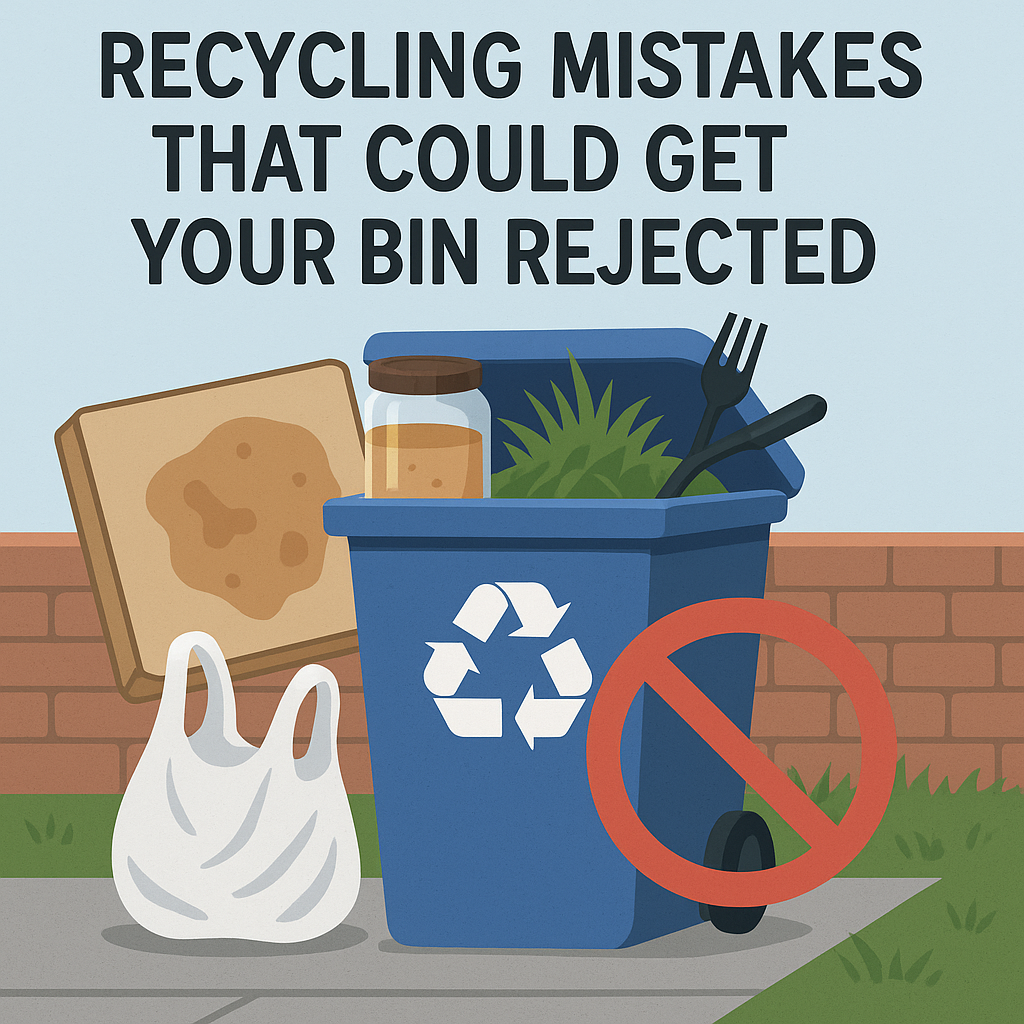
Recycling bins are often rejected because of contamination. Common reasons include:
- Plastic bags mixed with recyclables
- Food residue on containers
- Non-recyclable plastics
- Tangled materials like cords or hoses
- Loose shredded paper
Even a few incorrect items can cause an entire bin to be sent to landfill.
Common Recycling Mistakes People Make
Some of the most common mistakes include:
- Wish-cycling questionable items
- Not rinsing containers
- Recycling greasy cardboard
- Mixing trash with recyclables
Avoiding these mistakes is essential to recycle properly.
How Recycling Differs for Apartments and HOAs
If you live in:
- An apartment building
- A condo
- An HOA-managed neighborhood
Recycling rules may be:
- Set by property management
- Handled by private haulers
- More restrictive than city programs
Always check local guidelines.
How to Prepare Items for Recycling
Before placing items in the recycling bin:
- Empty containers
- Rinse lightly if needed
- Flatten cardboard boxes
- Remove food residue
Proper preparation improves recycling success rates.
Recycling During Holidays and Service Delays
During holidays or service disruptions:
- Recycling pickup may be delayed
- Overflow may be rejected
- Extra rules may apply
Checking schedules in advance helps avoid problems.
How to Check Your Local Recycling Rules
The fastest ways to check local rules:
- City or county sanitation websites
- Address-based lookup tools
- Service alerts or notices
- Customer service contacts
Local rules always override general guidance.
Why Recycling Properly Matters
Learning how to recycle properly in the US helps:
- Reduce landfill waste
- Improve recycling efficiency
- Lower contamination rates
- Support local recycling programs
Recycling only works when done correctly.
Tips to Recycle Properly Every Time
- Follow local rules
- Keep recyclables clean and dry
- Avoid plastic bags
- When in doubt, throw it out
- Check updates regularly
Frequently Asked Questions
Is recycling the same everywhere in the US?
No. Rules vary by city and county.
Can I recycle dirty containers?
No. Food residue causes contamination.
Are plastic bags recyclable curbside?
Usually not. Many stores offer drop-off recycling.
Why wasn’t my recycling collected?
Most often due to contamination.
How do I find my local recycling rules?
Through your city’s sanitation department or official website.

Pingback: Recycling Symbols Explained: What Those Numbers Really Mean - Trash Pickup Schedule Day