Every spring and fall, the same question starts popping up in homes all across the United States:
“Where am I supposed to put all these leaves, branches, and garden waste?”
Some people dump it in the trash. Others try to squeeze it into the recycling bin. A few leave it in piles on the curb, hoping it magically disappears. But yard waste is actually a completely separate category in most cities, and putting it in the wrong place can get your bin rejected, fined, or ignored for weeks.
If you’ve ever been confused by this topic, you’re not alone. Yard waste rules are often more complicated than regular trash or recycling, and they change depending on your city, the season, and even the street you live on.
This guide will break everything down in a simple, clear way so you’ll always know exactly what’s allowed and what’s not when it comes to yard waste pickup in the U.S.
What Is Considered “Yard Waste”?
Yard waste (also called “green waste” in some places) includes natural organic material that comes from your yard or garden.
The most common items are:
- Grass clippings
- Leaves
- Small branches and twigs
- Weeds
- Flowers and plants
- Garden trimmings
- Small tree limbs
In many cities, yard waste has its own collection cycle and its own rules, completely separate from regular trash and recycling.
This means it should never be placed in:
- Regular trash bin
- Recycling bin
- Bulk pickup pile
Doing so is one of the main reasons bins are rejected during collection.
How Most Cities Collect Yard Waste
There are typically three systems used in the U.S.:
1. Green Bin System
You’re given a green bin, similar to your trash and recycling bins. All yard waste goes inside, loose or bagged.
- Most common on the West Coast
- Used in major cities like San Diego, Seattle, Portland, etc.
- Often picked up weekly or bi-weekly
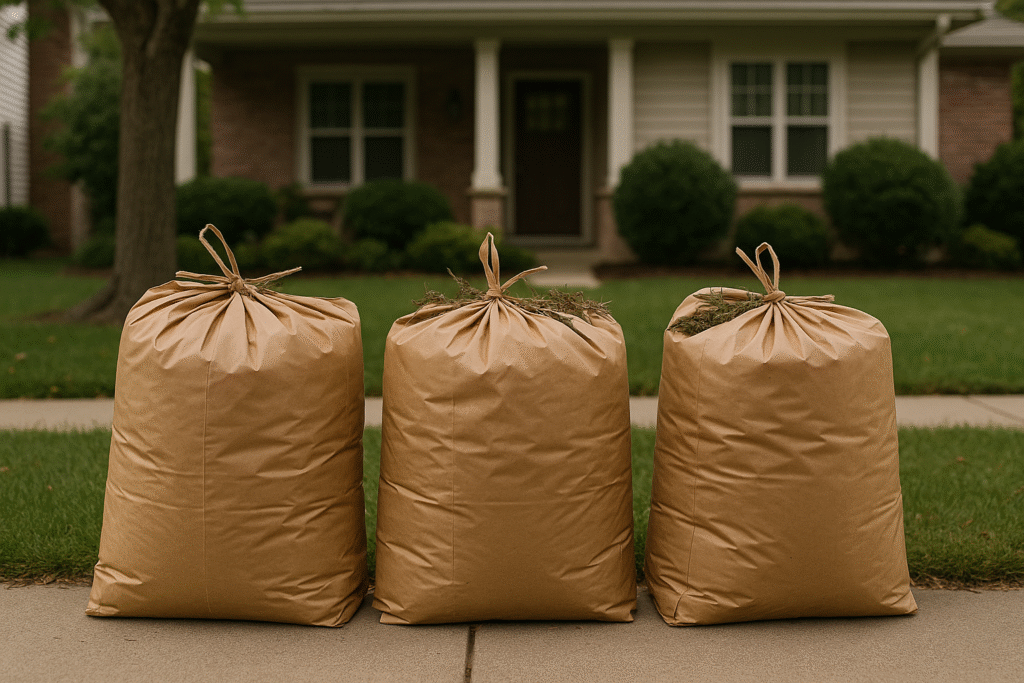
2. Paper Yard Bags
Instead of a bin, your city requires:
- Brown paper bags (not plastic)
- Sold at Home Depot, Lowe’s, supermarkets
These bags are placed on the curb next to your trash or recycling bins on specific days.
This system is common in suburban and mid-sized cities.
3. Loose Pile or Bundled Pickup
In some areas, you can:
- Place leaves in a loose pile
- Tie branches into bundles
- Place them on the curb
This is very seasonal and often restricted to fall or spring cleanup periods.
✅ What IS Usually Allowed in Yard Waste Pickup
This is what most U.S. cities accept:
- Grass and lawn clippings
- Leaves (including dry fall leaves)
- Garden plants and flowers
- Small branches (usually under 4 feet long)
- Weeds and hedge trimmings
- Small tree cuttings
Some cities even allow:
- Christmas trees (after removing decorations)
- Pumpkins (after Halloween)
- Natural wreaths
But they must be:
- Free of plastic, metal, or decorations
- Untreated by chemicals
❌ What Is NOT Allowed in Yard Waste
This is extremely important. These items should never go into yard waste:
- Dirt or rocks
- Sand or soil
- Plastic plant pots
- Fertilizer bags
- Landscaping fabric
- Treated wood
- Lumber or fences
- Animal waste
- Food waste
- Fruit peels
- Large tree trunks
These materials can ruin composting systems, damage machinery, and contaminate entire loads.
If you do need to get rid of large items like wood, furniture or big objects, that belongs in bulk pickup, not yard waste.
Why Yard Waste Has Different Rules
Yard waste isn’t just “trash.” In many states, it is actually:
- Turned into compost
- Turned into mulch
- Used for soil restoration
- Used in city landscaping projects
That means it has real economic and environmental value.
But for that to work, it must be 100% organic and clean.
Just one plastic bag or one soda can can ruin an entire truckload and send it straight to the landfill instead of being reused.
That’s why the rules are strict.
Seasonal Differences (Very Important)
Yard waste rules change throughout the year.
Spring & Summer
- More frequent pickup
- More grass clippings
- Tree trimming season
- Gardening debris
Fall
- Massive leaf collection programs
- Extra pickup days in many cities
- Special leaf-only zones
Winter
- Often reduced or paused entirely
- Some cities suspend service
- Cold weather stops composting
This is why it’s important to check your local schedule — just like you do with trash and recycling.
What Happens If You Do It Wrong?
Here’s the reality:
If you place incorrect items into your yard waste, the crew may:
- Leave your bin or bags behind
- Attach a warning label
- Report your address
- Issue fines in some areas
And most importantly…
They usually don’t tell you directly what you did wrong.
So then you wait another full week or even a full month.
That’s why it’s better to be safe than sorry.
How to Make It Easy at Home (Simple System)
Here’s a simple system you can follow at your house:
- Pick a corner outside for yard waste
- Keep one container or bin labeled “Yard Only”
- Place only green, organic material in it
- Tie branches with natural twine
- Use paper bags if required
- Put it out the night before schedule
Add a phone reminder just like with trash day.
What About Apartments or HOAs?
If you live in:
- An apartment complex
- A condominium
- A gated community
- A neighborhood with an HOA
The rules might be different.
Often:
- Yard waste is handled by landscapers
- You are not allowed to put it on the curb
- There may be a shared green bin
Always check with management first.
Yard Waste vs Bulk Pickup (Do NOT Mix Them)
This is a very common mistake.
| Yard Waste | Bulk Pickup |
|---|---|
| Leaves | Mattress |
| Grass | Couch |
| Branches | Furniture |
| Plants | Appliances |
| Trimmed hedges | Large wood |
If it doesn’t come directly from plants or a garden, it’s probably not yard waste.
Final Thoughts
Yard waste might look simple, but it’s actually one of the most commonly misunderstood parts of waste collection in the U.S.
Once you understand that it is:
- Separate from trash
- Separate from recycling
- Highly regulated
- Environmentally valuable
It becomes much easier to manage correctly.
By following the rules in this guide, you’re not only avoiding trouble — you’re actively helping your city reduce landfill waste and create something useful.
And that matters.