
INTRODUCTION
Understanding trash and recycling rules in the United States can be confusing. There is no single nationwide system, and what is accepted in one city may be rejected in another.
This trash and recycling guide in the US is designed to give you a clear, practical overview of how trash pickup works across American cities, what goes in each bin, why recycling bins are often rejected, and how to quickly find your local pickup schedule.
Whether you live in a house, apartment, or rental property, this guide serves as a central reference for navigating trash and recycling rules in the US.
Table of Contents
How Trash and Recycling Works in the US
In the United States, trash and recycling services are managed at the local level. Cities, counties, or private waste companies decide how waste is collected, processed, and enforced.
Despite local differences, most municipalities follow a similar structure:
- Regular trash pickup (weekly or bi-weekly)
- Recycling pickup (weekly or every other week)
- Bulk trash pickup for large items
- Yard waste collection (seasonal or year-round)
- Special programs for hazardous waste and electronics
This decentralized system explains why checking local rules is essential, even if general guidelines are similar nationwide.
Trash vs Recycling: Understanding the Difference
Trash includes materials that cannot be reused or recycled efficiently. Recycling includes materials that can be collected, sorted, and processed into new products.
A simple rule used by many sanitation departments:
- If an item is dirty, greasy, or mixed, it usually belongs in trash.
- If it is clean, dry, and accepted locally, it may be recyclable.
One of the biggest problems in recycling programs is wish-cycling—placing questionable items in the recycling bin in the hope they can be recycled.
What Typically Goes in the Trash
Most US cities consider the following items regular trash:
- Food waste and leftovers
- Diapers and hygiene products
- Greasy or food-stained packaging
- Broken household items
- Styrofoam containers
- Plastic bags and film
These materials contaminate recycling streams and should not be placed in recycling bins.
Items That Should Never Go in Regular Trash
Certain materials are restricted or unsafe to dispose of in regular trash:
- Paint, chemicals, and solvents
- Batteries
- Electronics and TVs
- Large appliances
- Construction or renovation debris
These items usually require special drop-off locations, hazardous waste events, or bulk pickup services.
What Can Be Recycled in Most US Cities
Although recycling rules vary, many cities commonly accept:
- Paper and mail
- Newspapers and magazines
- Cardboard (flattened)
- Aluminum cans
- Steel food cans
- Plastic bottles and containers
- Glass bottles and jars (varies by city)
Items should be empty and lightly rinsed. Food residue is one of the main reasons recycling bins are rejected.
Plastic Recycling Numbers Explained
Plastic containers often display a number inside a triangle symbol. These numbers identify the type of plastic, not whether it is recyclable everywhere.
General guidance:
- #1 (PET) and #2 (HDPE) are widely accepted
- #3–#7 may only be accepted in limited programs
Always follow local recycling rules rather than relying solely on the symbol.
Why Recycling Bins Get Rejected So Often
Recycling bins are commonly rejected due to contamination. Frequent causes include:
- Plastic bags mixed with recyclables
- Food or liquid residue
- Non-recyclable plastics
- Tangled materials like cords or hoses
- Loose shredded paper
Even a small amount of contamination can cause an entire bin to be sent to landfill.
Single-Stream vs Multi-Stream Recycling in the US
Most cities use single-stream recycling, where all recyclables go into one bin. Some areas still use multi-stream recycling, which requires separating materials.
Single-stream systems are more convenient but more prone to contamination. Multi-stream systems reduce contamination but require more effort from residents.
Bulk Trash Pickup Explained
Bulk trash pickup is intended for items too large for standard bins, such as:
- Furniture
- Mattresses
- Appliances
- Carpets
- Large household items
Rules vary by city:
- Some cities offer free monthly bulk pickup
- Others require scheduling in advance
- Some charge fees based on item type
Placing bulk items out incorrectly can lead to fines or missed pickup.
Yard Waste Pickup Rules in the US
Yard waste usually includes:
- Leaves
- Grass clippings
- Small branches
- Garden trimmings
Common rules include:
- Using paper yard-waste bags
- Bundling branches to a specific length
- Seasonal collection limits
- Separate pickup days
In colder regions, yard waste pickup may stop during winter months.
Composting vs Yard Waste Collection
Some cities offer composting programs that accept food scraps and compostable materials. Yard waste programs typically do not accept food waste.
Mixing compostable food waste with yard waste can cause bins to be rejected.
How Holidays Affect Trash Pickup in the US
Many cities adjust trash and recycling schedules during major holidays. A common rule is a one-day delay for the remainder of the week.
However:
- Not all holidays affect service
- Private haulers may follow different schedules
- Apartment complexes may have separate rules
Always check holiday schedules in advance. Here – Find Your City.
Weather Delays and Emergency Changes
Trash pickup may also be delayed due to:
- Severe storms
- Snow or ice
- Flooding
- Emergency road closures
Cities usually announce changes through official websites or alerts.
Do Trash and Recycling Rules Change by City?
Yes, often significantly. Differences may include:
- Accepted recycling materials
- Pickup frequency
- Container size limits
- Bulk pickup fees
- Yard waste seasons
- Holiday policies
This is why a trash and recycling guide in the US provides general rules, but local information is always final.
How to Find Your Trash and Recycling Pickup Day
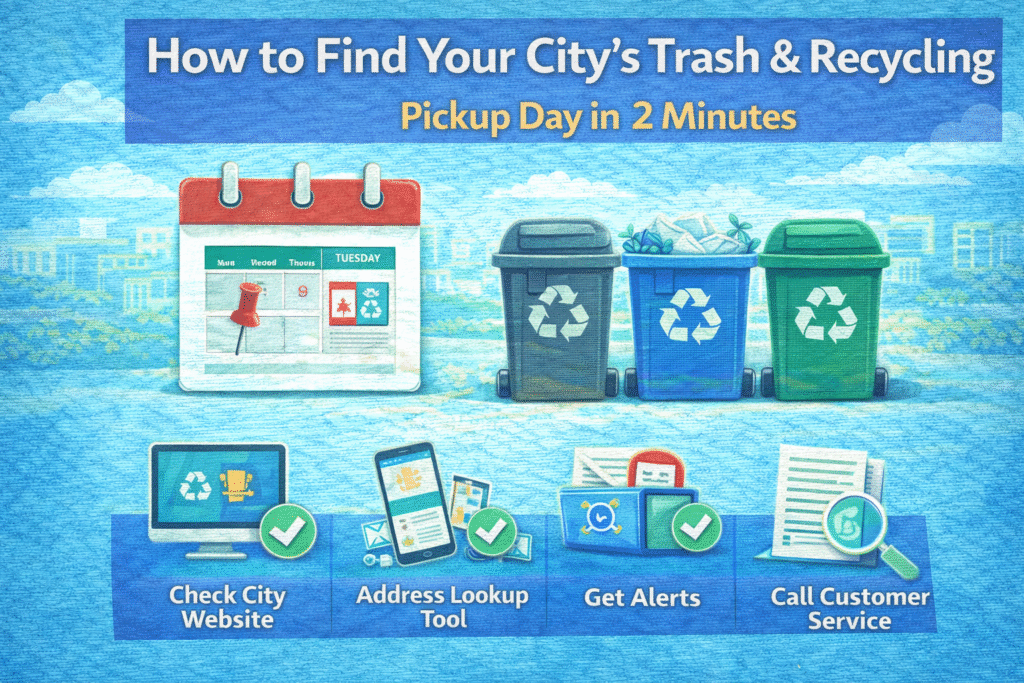
The fastest ways to find your local schedule:
- Visit your city or county sanitation website
- Use address-based lookup tools
- Check official holiday notices
- Review recent service alerts
Many cities update schedules throughout the year.
Rules for Apartments, Rentals, and HOAs
If you live in an apartment, rental, or HOA-managed community:
- Trash service may be handled privately
- Pickup days may differ from city schedules
- Recycling options may be limited
Always confirm rules with property management.
Best Practices to Avoid Missed Pickups and Fines
- Place bins out the night before
- Keep lids fully closed
- Do not overload containers
- Separate trash, recycling, and yard waste
- Avoid wish-cycling
- Check holiday schedules early
Frequently Asked Questions
Is trash pickup the same everywhere in the US?
No. Each city sets its own rules.
Why wasn’t my recycling collected?
Most often due to contamination or incorrect materials.
Do holidays always delay trash pickup?
No. Only certain holidays affect service.
Can furniture go in regular trash?
Usually not. Bulk pickup is required.
How do I check my local pickup day?
Through your city’s sanitation department or address lookup tools.
Pingback: Trash vs Recycling in the US: What Goes Where (Simple Guide) - Trash Pickup Schedule Day