
If there’s one thing most people feel confident about when it comes to recycling, it’s this:
“Paper, cardboard and glass are easy. Those are always recyclable, right?”
And while it’s true that these materials are among the most recyclable on Earth, the way people handle them at home often turns them into… trash.
Wrong preparation.
Food contamination.
Broken glass in the wrong place.
Wet cardboard.
Dirty paper.
Small mistakes can turn perfectly recyclable items into garbage that ends up in a landfill.
In this guide, you’ll learn the correct way to recycle paper, cardboard, and glass in the U.S., including what’s accepted, how to prepare it, what common mistakes to avoid, and how it connects with your city’s specific rules.
Why These Materials Matter So Much
Paper, cardboard, and glass are some of the most valuable and easily recyclable materials in the world.
When recycled correctly, they can become:
- New packaging
- Paper products
- Insulation
- Construction materials
- New glass containers
- Reusable goods
But when they are contaminated or prepared incorrectly, they often become non-recyclable and get sent to landfills instead.
That’s why understanding their proper disposal is so important.
If you still need a full overview of your local recycling system, start with:
👉 /complete-guide-trash-recycling-pickup-us-cities
👉 /trash-vs-recycling-what-goes-where
Now let’s break it down one material at a time.
✅ How to Recycle Paper Correctly
Paper is widely accepted in almost every U.S. recycling program. But not all paper is created equal.
Generally accepted paper:
- Office paper
- Notebook paper
- Envelopes (even with windows in most cities)
- Newspapers
- Magazines
- Flyers
- Printer paper
- Junk mail
But there’s a big condition:
Paper must be CLEAN and DRY.
If paper is:
- Covered in food
- Greasy
- Soaked
- Tied up with plastic
- Glitter-coated
- Laminated
…it becomes trash.
A great example is a pizza box:
✅ The clean top → Recycle
🚫 The greasy bottom → Trash
✅ How to Recycle Cardboard Correctly
Cardboard is one of the most valuable items in the recycling system.
Common recyclable cardboard includes:
- Shipping boxes (Amazon, online orders)
- Cereal boxes
- Shoe boxes
- Packaging boxes
- Moving boxes
But again, preparation is everything.
To properly recycle cardboard:
✅ Remove all tape when possible
✅ Remove plastic inserts
✅ Remove Styrofoam
✅ Flatten the box
✅ Make sure it’s dry
✅ No food contamination
If cardboard gets wet from rain or leaks, it loses recycling value fast.
That’s why tossing cardboard loosely into a wet bin is one of the most common causes of contamination.
A good rule:
If you wouldn’t feel comfortable touching it with clean hands, it probably shouldn’t be recycled.
🚫 Cardboard That Should NOT Be Recycled
Not all cardboard belongs in the recycling bin.
These should go in the trash:
- Wax-coated cardboard (example: frozen food boxes)
- Greasy pizza boxes (bottom part)
- Paper towels
- Napkins
- Used plates
- Tissue
- Paper with food residue
- Cardboard soaked in liquids
These items ruin clean recycling loads.
✅ How to Recycle Glass Correctly
Glass is one of the most interesting materials because:
- It is 100% recyclable
- It can be recycled endlessly
- It doesn’t degrade in quality
However, not all glass is the same, and not all glass belongs in a curbside bin.
Usually accepted glass:
- Glass bottles (juice, soda, beer)
- Glass jars (sauces, pickles, jams)
Before placing glass in the recycling bin:
✅ Empty the contents
✅ Rinse it quickly
✅ Remove the lid (metal lids recycled separately if accepted)
✅ No food inside
You DON’T usually need to remove labels.
🚫 Glass That Should NOT Be Recycled (Curbside)
This is where people make mistakes.
Do NOT put these in your regular recycling:
- Window glass
- Mirrors
- Light bulbs
- Pyrex
- Drinking glasses
- Ceramics
- Plates
- Vases
These types of glass have different melting points and can contaminate entire loads.
If you are getting rid of these, consider:
- Special drop-off centers
- Bulk pickup (for heavy/dangerous items)
Broken glass in particular should always go in the trash, carefully wrapped.
Should You Separate Glass From Other Recycling?
This depends on your city.
Some cities are:
- Single-stream → Everything in one bin
- Dual-stream → Separate bins for paper & containers
- Glass-only programs → Require separate drop-off
If your city has a separate glass program, placing it in the normal recycling bin might cause it to be rejected.
How This Links to Plastic Recycling
Once you understand paper, cardboard and glass, your next challenge is plastic — which is much trickier.
If you haven’t already, make sure to read:
👉 /plastic-recycling-numbers-explained
That article will completely change how you treat plastic.
Together, these two guides create a perfect recycling foundation.
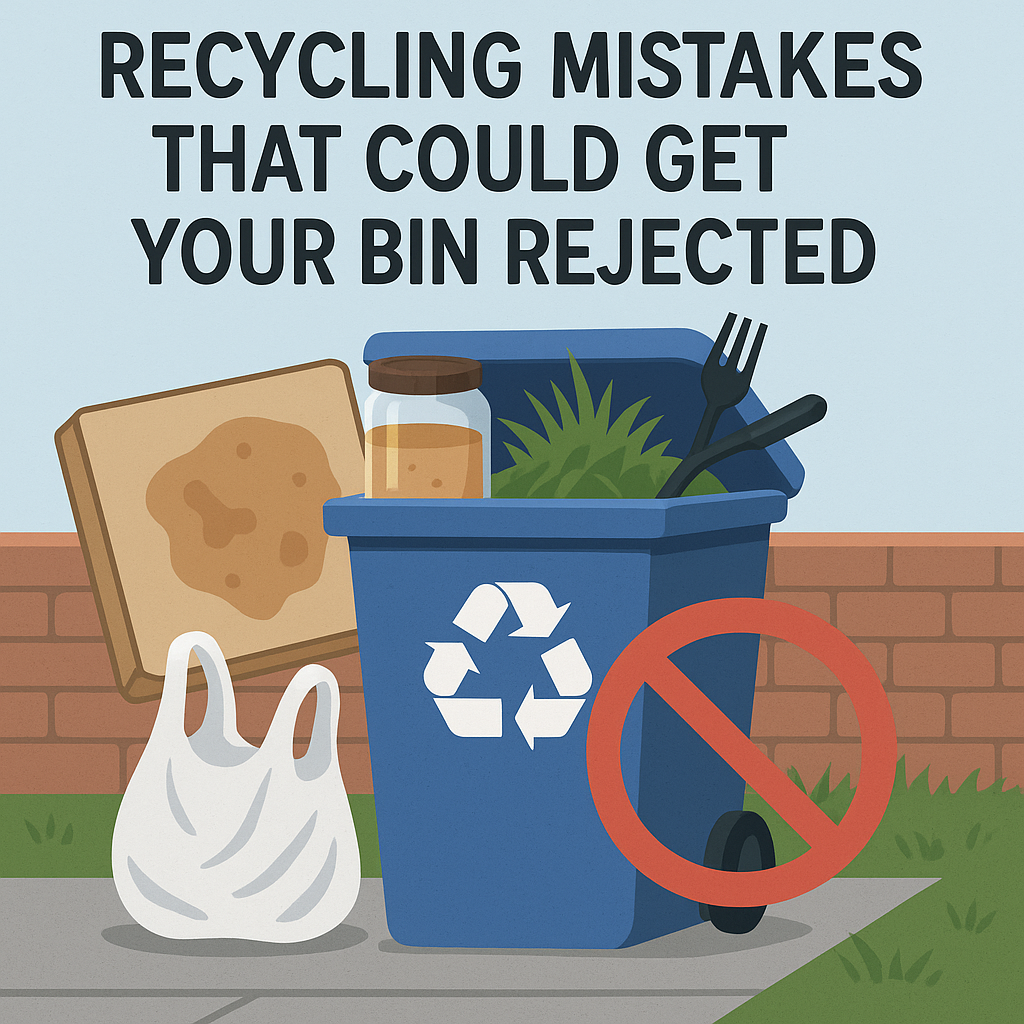
Common Mistakes With Paper, Cardboard & Glass
Here are the biggest errors people make:
❌ Recycling wet cardboard
❌ Including greasy paper
❌ Throwing broken glass in recycling
❌ Including ceramics or plates
❌ Leaving food inside jars
❌ Putting paper in plastic bags
❌ Not flattening boxes
These mistakes are so common that they are some of the main reasons bins get rejected, as explained here:
👉 /what-to-do-if-trash-was-never-picked-up
If your recycling bin is skipped, 9 times out of 10, the reason is contamination.
A Practical Home Example
Let’s say you just ordered food and online packages:
You now have:
- Cardboard pizza box
- Glass sauce jar
- Shipping box
- Paper napkins
- Plastic wrap
Here is the correct sorting:
✅ Top of clean pizza box → Recycle
🚫 Greasy bottom of box → Trash
✅ Glass jar (cleaned) → Recycle
✅ Shipping box (flattened) → Recycle
🚫 Paper napkins → Trash
🚫 Plastic wrap → Trash
✅ Plastic bottle if #1 or #2 → Recycle (after checking)
If everyone followed this, recycling systems would be almost perfect.
Why This Matters More Than Ever in 2025
In past years, a lot of American recycling was shipped overseas. Today, many of those routes are closed.
That means:
- U.S. cities must handle recycling locally
- They are stricter than ever
- Contaminated loads are rejected faster
- Rules are enforced more seriously
This is why education through your website is so powerful.
You’re helping people adapt to a changing system.
How To Make Recycling Easier at Home
Here are some real-life tips:
✅ Keep a small recycling guide on your fridge
✅ Use two bins side by side (trash + recycle)
✅ Rinse containers quickly after use
✅ Flatten boxes immediately
✅ Teach kids the system
✅ Check your schedule and rules regularly
Final Thoughts
Recycling paper, cardboard and glass seems simple — but doing it correctly is what makes the real difference.
Now you know:
- What is accepted
- What is not
- How to prepare it
- Why it sometimes gets rejected
- How your actions affect the whole system

Pingback: How to Recycle Properly in the U.S.: A Beginner’s Guide - Trash Pickup Schedule Day
Pingback: How to Reduce Household Trash by 50% Without Changing Your Lifestyle - Trash Pickup Schedule Day