Most people don’t think about trash collection… until something goes wrong.
You put your bin out like always—but it doesn’t get picked up. Or it gets picked up earlier than expected. Or your neighbor’s bin is empty, but yours is still full.
At that point, you realize something important:
👉 Trash collection in the US isn’t as simple as “put it out and forget it.”
Behind the scenes, it’s a structured system based on routes, schedules, rules, and local logistics—and once you understand how it actually works, everything becomes much easier.
This guide explains how trash collection works in the US, why schedules vary, what rules matter most, and how to avoid the common mistakes that lead to missed pickups.
The Basics: How Trash Collection Actually Works
At its core, trash collection follows a simple structure:
- Households place waste in designated bins
- Bins are placed at the curb on collection day
- Sanitation trucks follow fixed routes
- Waste is transported to transfer stations or landfills
But that simplicity hides a much more complex system.
What’s really happening behind the scenes
- Routes are optimized to reduce fuel and time
- Collection days are assigned based on zones
- Different materials (trash, recycling, yard waste) may have separate trucks
Key insight:
You’re not just part of a neighborhood schedule—you’re part of a city-wide logistics system.
Trash Collection Schedules (Why Your Day Is What It Is)
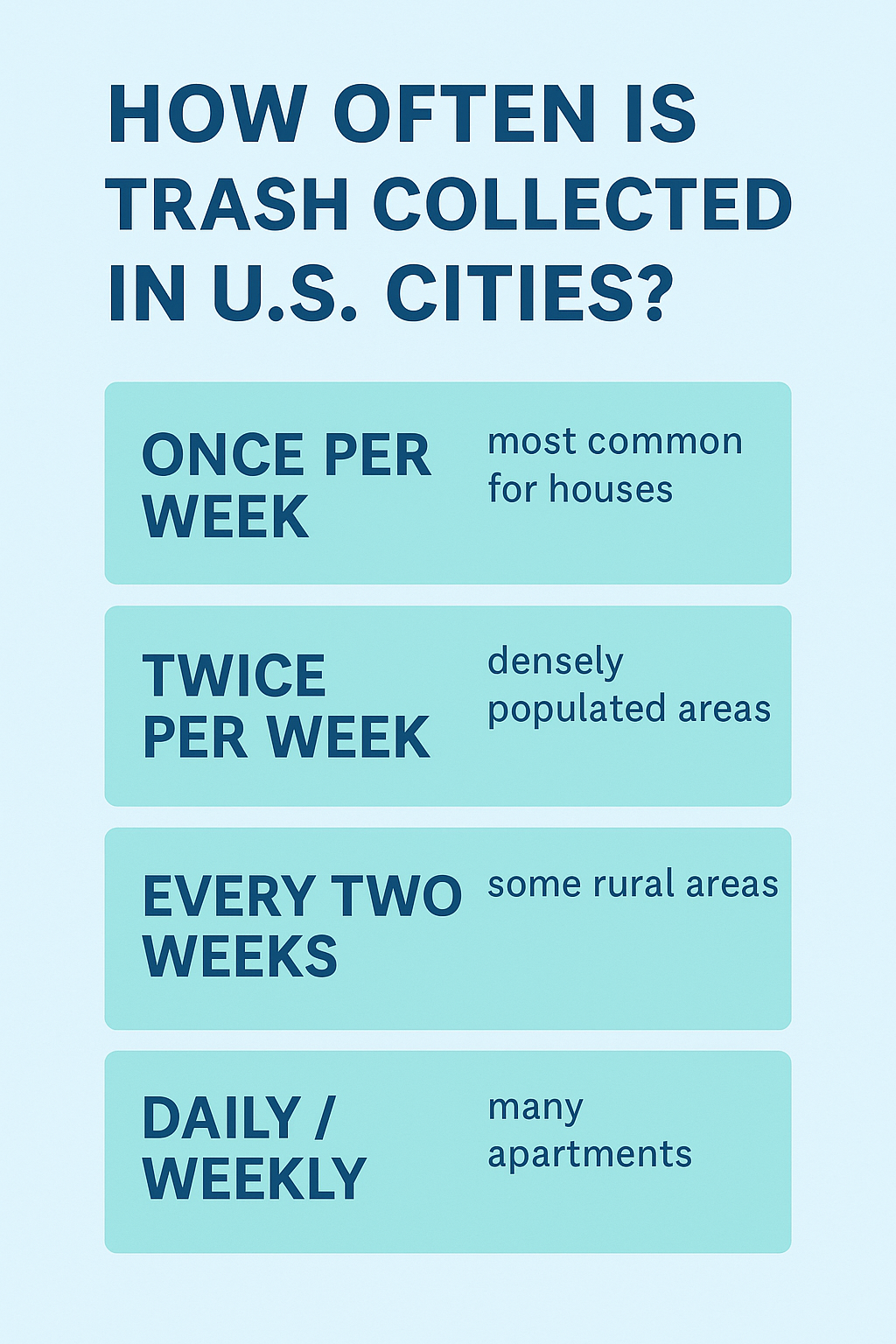
Most homes in the US have a fixed weekly pickup day.
For example:
- Monday → One neighborhood
- Tuesday → Another
- And so on
Why schedules don’t change often
Cities design routes to be:
- Efficient
- Predictable
- Balanced in workload
Changing schedules frequently would:
- Disrupt routes
- Increase costs
- Create confusion
Why your neighbor might have a different day
Even if they live nearby, they may be:
- In a different route zone
- Served by a different crew
- Assigned to a different service area
What Time Trash Gets Picked Up (And Why It Varies)
This is one of the biggest frustrations for homeowners.
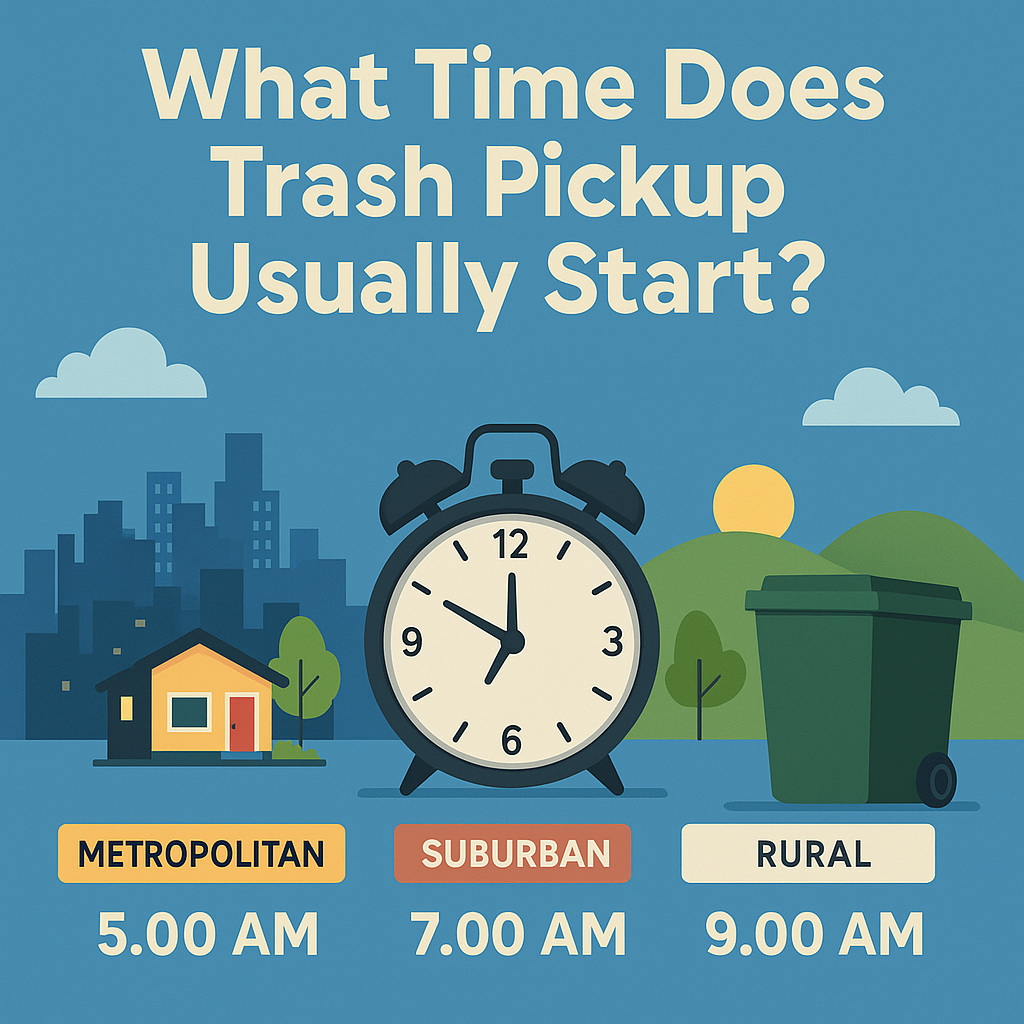
Typical pickup window:
- Early morning (as early as 6–7 AM)
- Through the afternoon
Why timing is unpredictable
Trash trucks:
- Follow long routes with many stops
- Adjust based on traffic and volume
- May change order due to operational needs
What most people don’t realize:
Your pickup time can change week to week—even if your day stays the same.
The Different Types of Collection Services
Not all trash collection is the same.
1. Regular Trash (Solid Waste)
- Weekly pickup
- Standard household waste
2. Recycling
- Weekly or biweekly
- Separate bin (usually blue)
3. Yard Waste
- Weekly or seasonal
- Separate rules and schedules
4. Bulk Pickup
- Scheduled or periodic
- For large items
Important:
Each of these may:
- Have different days
- Be collected by different trucks
- Follow different rules
Why Trash Collection Rules Exist (And Why They Matter)
Rules aren’t random—they exist to keep the system running smoothly.
Common rules include:
- Bin placement
- Weight limits
- Accepted materials
- Timing requirements
Why they matter:
If rules aren’t followed:
- Crews may skip your bin
- Routes get delayed
- Safety risks increase
What Most People Get Wrong About Trash Collection
1. “As long as it’s out, they’ll take it”
Not true.
Bins must:
- Be placed correctly
- Be accessible
- Follow guidelines
2. “Timing doesn’t matter”
It does.
Putting bins out late is one of the top reasons for missed pickups.
3. “All waste is collected together”
It isn’t.
Different materials often:
- Have separate trucks
- Follow different schedules
Real-Life Situations That Cause Confusion
“My trash wasn’t picked up, but my neighbor’s was”
Possible reasons:
- Your bin was blocked
- It wasn’t placed correctly
- It exceeded limits
“The truck came earlier than usual”
This happens when:
- Routes are adjusted
- Crews start earlier
- Volume is lower
“They skipped my recycling but took trash”
Common causes:
- Different trucks
- Different schedules
- Contamination issues
How to Make Sure Your Trash Gets Picked Up Every Time
Follow these simple rules:
✔ Put bins out the night before
Never rely on exact timing.
✔ Place bins correctly
- At the curb
- Not blocked by cars
- Facing the right direction (if required)
✔ Don’t overfill or overweight bins
Overflowing bins may be skipped.
✔ Follow material rules
Don’t mix:
- Trash
- Recycling
- Yard waste
✔ Stay updated on schedule changes
Especially during:
- Holidays
- Weather events
Why Trash Collection Changes Depending on the City
There is no universal system in the US.
Factors that affect collection:
1. Population size
Larger cities:
- More structured systems
- More complex routes
2. Geography
Urban vs suburban areas:
- Different access challenges
- Different route designs
3. Waste management provider
- City-run services
- Private companies
Each operates differently.
Things No One Explains Clearly (But You Should Know)
Trash collection is route-based, not time-based
Your pickup depends on:
- Where you are in the route
- Not a fixed hour
Crews may not come in the same order every week
Small changes can shift timing.
Weather and volume affect everything
Bad weather or heavy waste weeks can:
- Delay pickups
- Change routes
When You Should Take Action
If your trash isn’t picked up:
First, check:
- Was it placed correctly?
- Was it out on time?
- Are there schedule changes?
Then:
- Wait until the end of the day
- Contact your local provider if needed
FAQ – How Trash Collection Works in the US
Why does my pickup time change every week?
Because routes are dynamic. Traffic, volume, and operational changes affect timing.
What happens if I miss my pickup day?
You usually have to wait until the next scheduled pickup unless your city offers special services.
Can I put extra trash next to the bin?
Sometimes, but many cities require:
- Special bags
- Stickers or fees
Why was my bin left full?
Common reasons include:
- Improper placement
- Overweight bins
- Non-accepted materials
Do all cities collect trash the same way?
No. Systems vary widely depending on location and provider.
Should I always put my bins out the night before?
Yes. This is the safest way to avoid missing early pickups.
Final Thoughts
Understanding how trash collection works in the US isn’t about memorizing rules—it’s about understanding the system behind them.
Once you realize:
- It’s route-based
- Timing isn’t fixed
- Rules are enforced for a reason
…everything becomes predictable.
And that means fewer missed pickups, fewer frustrations—and one less thing to worry about every week.