
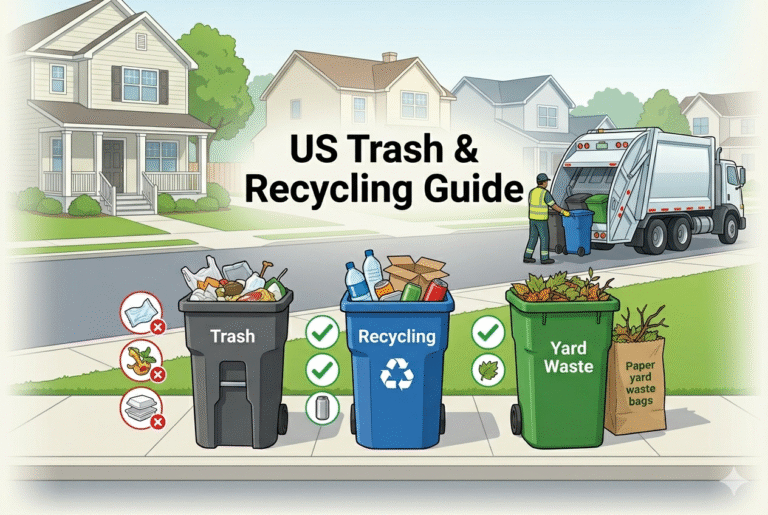
If there’s one thing that confuses almost everyone living in the US—whether you’ve just moved or you’ve been here for years—it’s this:
👉 What exactly goes where when it comes to trash and recycling?
You’d think it’s simple. One bin for trash, one for recycling… done.
But in reality, the system is much more nuanced.
Different cities have different rules. Some materials are accepted in one place but rejected in another. And small mistakes—like tossing a greasy pizza box into recycling—can cause entire batches to be rejected.
This guide breaks everything down clearly:
how trash and recycling work in the US, what you can and can’t throw away, how pickup systems operate, and the real-world mistakes people make every week.
How Trash and Recycling Systems Work in the US
At a basic level, waste collection in the US is divided into categories:
- Trash (landfill waste)
- Recycling (processed materials)
- Yard waste (organic material)
- Bulk waste (large items)
Each category exists for a reason—not just organization, but efficiency and cost control.
Why separation matters more than people think
When waste is mixed incorrectly:
- Recycling loads can be rejected entirely
- Processing becomes more expensive
- Materials that could be reused end up in landfills
👉 Key insight: Recycling isn’t just about throwing items in a blue bin—it’s about keeping materials clean and usable.
Trash vs Recycling: What Goes Where (Clear Breakdown)
This is where most people get things wrong.
🗑️ Trash (Landfill Waste)
These are items that cannot be processed or reused efficiently:
- Food waste
- Diapers
- Broken ceramics
- Greasy or contaminated packaging
- Non-recyclable plastics
👉 If it’s dirty, mixed, or hard to process → it usually belongs in trash.
♻️ Recycling (Clean & Processable Materials)
Typical accepted materials:
- Paper and cardboard (clean and dry)
- Plastic bottles and containers
- Glass bottles and jars
- Aluminum cans
👉 The key rule: clean, empty, and dry
🌿 Yard Waste (Organic Material)
- Leaves
- Grass clippings
- Branches
- Garden debris
Usually collected separately and turned into compost or mulch.
Why Recycling Rules Are Different in Every City
One of the biggest frustrations is inconsistency.
Why your city may have different rules:
1. Local recycling facilities
Not all facilities can process the same materials.
2. Contracts with waste companies
Private vs municipal systems vary in capabilities.
3. Regional policies
States and cities set different environmental priorities.
👉 What this means for you:
Something recyclable in one city might be rejected in another.
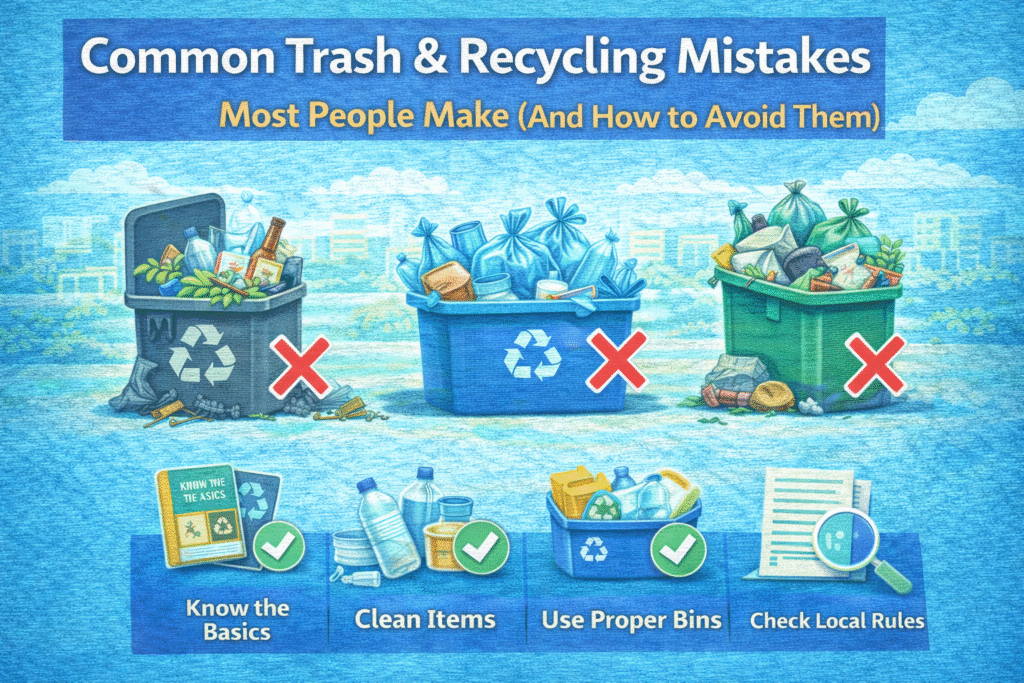
What Most People Get Wrong About Recycling
1. “If it has a recycling symbol, it’s recyclable”
Not always.
That symbol often indicates the type of plastic, not whether your city accepts it.
2. “Recycling doesn’t need to be clean”
This is one of the biggest mistakes.
Dirty items:
- Contaminate other materials
- Can cause entire loads to be discarded
3. “Cardboard is always recyclable”
Only if it’s clean.
- Pizza boxes with grease → trash
- Wet cardboard → trash
4. “Everything gets sorted later anyway”
No.
While some sorting happens:
- Highly contaminated loads may be rejected entirely
Real-Life Situations That Cause Confusion
“Can I recycle a pizza box?”
- Top clean part → yes
- Greasy bottom → no
“Can I put plastic bags in recycling?”
Usually no.
They:
- Jam sorting machines
- Require special drop-off programs
“What about takeout containers?”
Depends:
- Clean plastic → maybe recyclable
- Foam containers → often not accepted
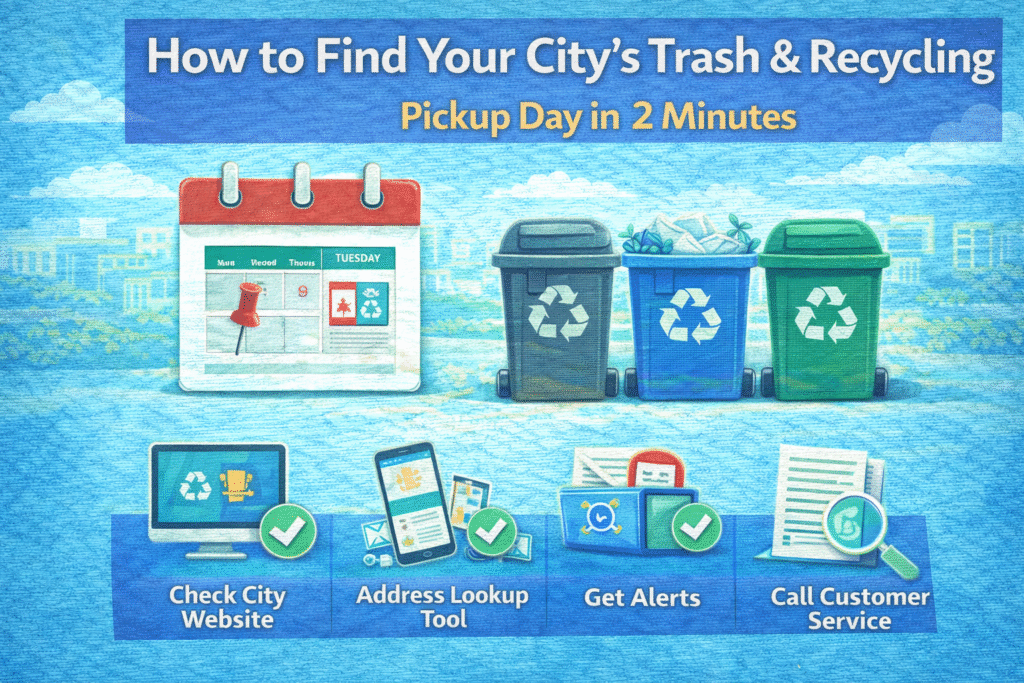
How Trash and Recycling Pickup Works
Most US households follow a structured system.
Typical setup:
- Trash → weekly pickup
- Recycling → weekly or biweekly
- Yard waste → seasonal or weekly
Why pickups are separated
Different materials require:
- Different trucks
- Different processing facilities
Why your pickup day and time vary
Collection is:
- Route-based (not time-based)
- Influenced by traffic, volume, and logistics
👉 That’s why your pickup might come at 7 AM one week and 1 PM the next.
The Hidden Rules That Actually Matter
These aren’t always obvious—but they determine whether your waste gets collected.
✔ Placement rules
- At the curb
- Not blocked by cars
- Proper spacing between bins
✔ Timing rules
- Usually before early morning
- Best practice: night before
✔ Capacity rules
- Overfilled bins may be skipped
- Loose trash may not be collected
✔ Separation rules
Mixing materials can lead to:
- Rejection
- Missed pickups
Why Recycling Fails (And What Cities Don’t Always Explain)
Even with good intentions, recycling systems struggle.
The main problem: contamination
When too many items are:
- Dirty
- Incorrect
- Mixed improperly
Facilities may:
- Reject entire truckloads
- Send them to landfill
👉 Hard truth:
Good recycling depends more on correct sorting at home than on advanced technology.
How to Recycle Properly (Simple System That Actually Works)
If you follow this, you’ll be ahead of most households:
Step 1: Think “clean and dry”
If it’s dirty → trash it.
Step 2: When in doubt, leave it out
Better to throw one item in trash than contaminate recycling.
Step 3: Flatten cardboard
Saves space and improves collection efficiency.
Step 4: Keep materials loose
Don’t bag recyclables unless your city requires it.
Step 5: Learn your local rules
This is the most important step.
Things No One Explains Clearly
Recycling is an economic system
If materials:
- Aren’t clean
- Aren’t valuable
They may not be recycled at all.
Not everything “recyclable” is actually recycled
Some materials:
- Are too costly to process
- End up in landfill anyway
Convenience often creates mistakes
Single-stream recycling (one bin):
- Easier for users
- More contamination risk
When You Should Double-Check Before Throwing Something Away
Always pause if the item is:
- A mix of materials (plastic + metal + paper)
- Dirty or greasy
- Soft plastic (bags, wrappers)
- Electronic or hazardous
👉 These are the items most likely to cause problems.
FAQ – Trash and Recycling in the US
Why does my recycling sometimes get rejected?
Usually due to contamination, improper sorting, or non-accepted materials in the bin.
Can I recycle plastic bags at home?
In most cities, no. They must be taken to special collection points.
Do I need to wash recyclables?
Yes—but lightly. They don’t need to be spotless, just free of food residue.
Why is recycling collected less often than trash?
Because it:
- Doesn’t decompose
- Doesn’t create odor
- Is processed differently
What happens after recycling is collected?
Materials go to sorting facilities, where they are:
- Separated
- Processed
- Sold for reuse
Is recycling really effective?
It can be—but only if materials are clean and properly sorted.
What should I do if I’m unsure about an item?
Check your city’s guidelines or default to trash to avoid contamination.
Final Thoughts
Understanding trash and recycling in the US isn’t about memorizing long lists of rules.
It’s about understanding the logic behind the system:
- Keep materials clean
- Separate correctly
- Follow local rules
Once you do that, everything becomes simpler.
And more importantly—you’re not just getting rid of waste.
👉 You’re helping the system actually work the way it’s supposed to.
I think this is among the most important info for me.
And i’m glad reading your article. But want to remark on some general things, The website style is wonderful,
the articles is really excellent : D. Good job, cheers
Hi there! I could have sworn I’ve visited this blog
before but after looking at many of the articles I realized it’s new to
me. Anyways, I’m definitely pleased I discovered it and I’ll be book-marking it and checking back often!