If you’ve ever stood in your garden holding a bag of leaves, fresh-cut grass, or broken branches and wondered:
“Can I just throw this in the regular trash?”
You’re not alone.
This is one of the most common questions homeowners, renters, and gardeners ask in the United States. And while it may seem like “just plant material,” yard waste is actually treated very differently than household trash in most cities.
Knowing the difference isn’t just about following rules. It affects:
- Your local environment
- The efficiency of waste systems
- Whether your bin gets rejected
- The amount that ends up in landfills
- And sometimes… whether you get a fine
In this guide, you’ll learn the real difference between yard waste and regular trash, how each one is handled, what belongs where, and how to dispose of yard waste the correct, legal, and eco-friendly way.
First: What Is Considered Yard Waste?
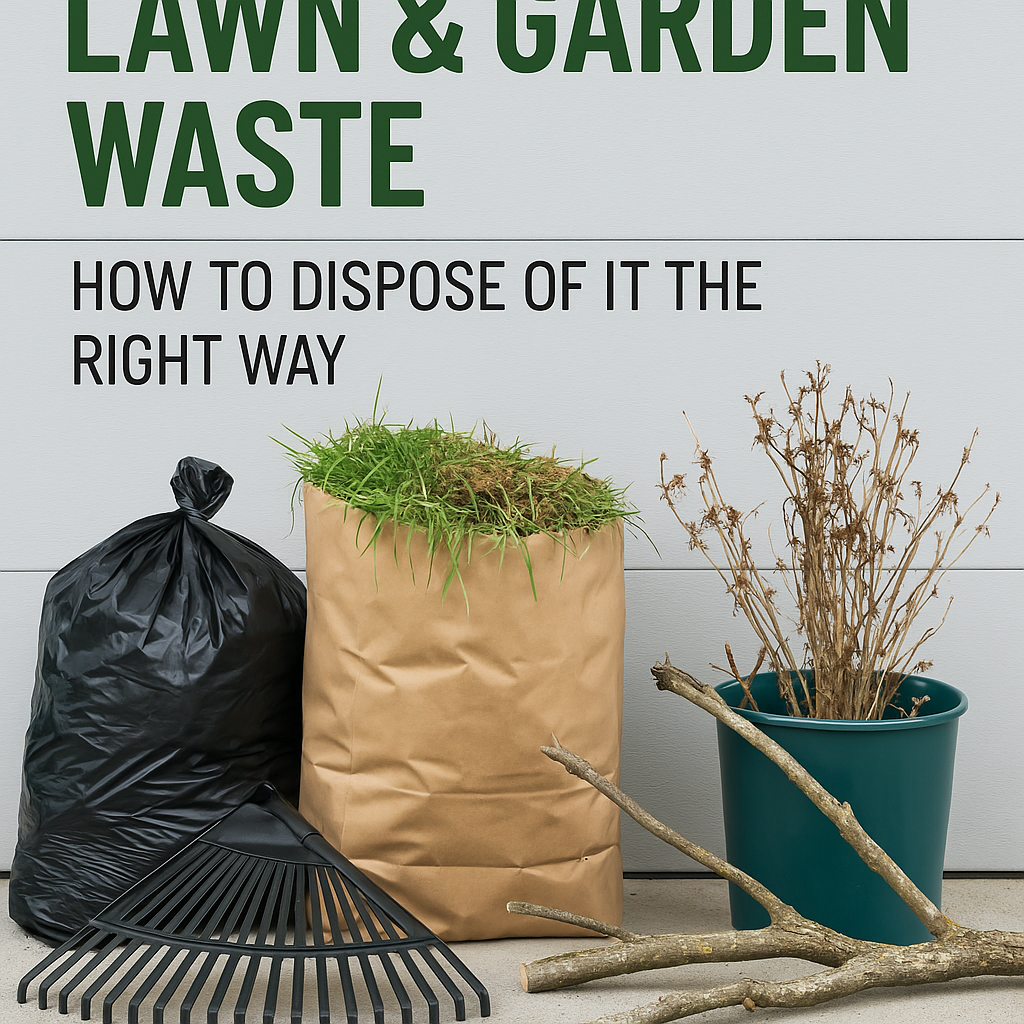
Yard waste (also called green waste) includes organic material that comes from normal yard maintenance, such as:
- Grass clippings
- Leaves
- Branches & twigs
- Tree trimmings
- Shrub cuttings
- Weeds (without soil attached)
- Plants and flowers
- Small pieces of natural wood
Basically, anything that comes from your yard, garden, or lawn, as long as it is natural and untreated.
This waste is extremely valuable when processed correctly.
Cities can turn it into:
✅ Compost
✅ Mulch
✅ Fertilizer
✅ Landscaping material
✅ Soil enrichment
That’s why many cities separate it from normal trash.
For a more practical breakdown on specific disposal methods, see:
👉 /how-to-dispose-of-yard-and-garden-waste
What Is Considered Regular Trash?
Regular trash is everything that cannot be:
- Recycled
- Composted
- Reused
- Processed as green waste
Examples include:
- Food waste
- Diapers
- Plastic packaging
- Broken toys
- Textiles
- Styrofoam
- Dirty paper products
- Mixed materials
- Non-organic items
This waste usually goes straight to:
- Landfills
- Incinerators
- Waste-to-energy facilities
Unlike yard waste, trash is not designed to be reused or turned back into something useful.
That’s the biggest difference.
The Biggest Difference: What Happens After Pickup
This is the part most people never see.
🌿 Yard Waste
When yard waste is collected separately, it often goes to:
- Composting facilities
- Mulching centers
- Soil processing plants
There, it is:
- Shredded
- Aerated
- Broken down naturally
- Turned into nutrient-rich compost
This compost is then used in:
- Parks
- Farms
- Landscaping projects
- Public works
- Home gardens
Basically, your leaves could end up feeding next year’s trees.
🗑️ Regular Trash
Regular trash usually goes to:
- Landfills (buried and sealed)
- Incineration facilities
- Waste-to-energy plants
Nothing from it is returned to nature in a healthy way. In fact, a large portion of it creates:
- Methane gases
- Soil pollution
- Groundwater contamination
- Long-term environmental damage
That’s why separating yard waste is so important.
Why Cities Don’t Want Yard Waste in the Trash
People often think:
“It’s just leaves, surely it’s fine.”
But when yard waste is put in a landfill, it:
- Decomposes without oxygen
- Produces methane (a strong greenhouse gas)
- Takes up massive space
- Creates acidic runoff
That’s why many cities:
✅ Ban yard waste from normal trash
✅ Require special bags or bins
✅ Offer dedicated green waste service
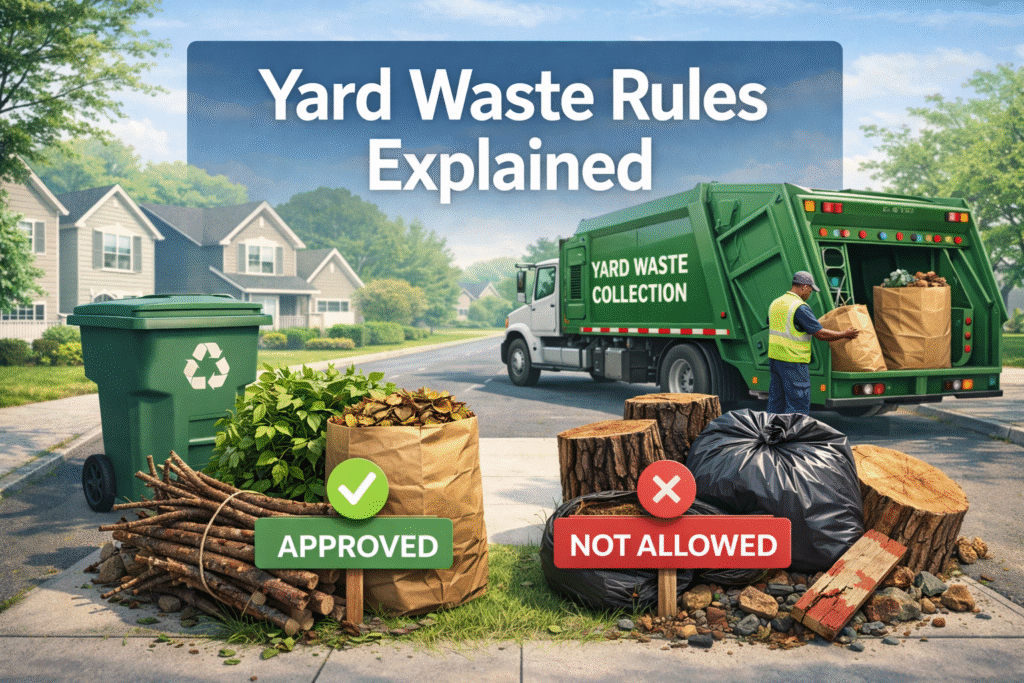
✅ Give fines if mixed incorrectlyIf you mix yard waste into your normal bin, your whole bin may be rejected.
Can Yard Waste Ever Go in Regular Trash?
The short answer: it depends on your city.
Some cities allow tiny amounts, while others completely ban it.
In restricted cities:
🚫 Any amount of grass or leaves in trash = rejection
🚫 Branches in the bin = rejection
🚫 Soil = rejection
In more flexible cities, small volumes might be allowed, but it is still highly discouraged.
This is where your website becomes incredibly powerful.
How Yard Waste Is Usually Collected
There are four main systems in the U.S.:
✅ 1. Curbside Yard Waste Bin
Some homes have a separate green or brown bin for yard waste.
This is collected:
- Weekly
- Bi-weekly
- Or monthly (depending on season)
This is the easiest and cleanest method.
✅ 2. Special Yard Waste Bags
Other cities require:
- Paper compostable bags
- Clear biodegradable bags
- Bundles of tied branches
These are picked up on specific “yard waste days.”
✅ 3. Seasonal Collection
Many cities only collect yard waste during spring, summer, and fall.
In winter, the service may stop completely.
That’s important to consider if you do winter pruning.
✅ 4. Drop-Off Centers
If your city doesn’t offer curbside pickup, you may need to bring it to a city drop-off location yourself — often for free or a small fee.
Yard Waste vs Bulk Waste (Important Difference)
Another common mistake is confusing yard waste with bulk waste.
Bulk waste = large items like furniture
Yard waste = organic garden material
If you’re getting rid of:
- Tree trunks
- Very large branches
- Landscaping debris
- Stumps
You may need to use bulk pickup instead.
Here’s your perfect guide for that:
👉 /bulk-pickup-examples-what-items-are-accepted
And to compare cost:
👉 /free-vs-paid-bulk-pickup-costs
This prevents a LOT of mistakes.
How to Prepare Yard Waste the Right Way
To make sure your yard waste is accepted, follow these rules:
✅ Remove excess soil
✅ Do not mix with trash
✅ Do not include plastic pots
✅ Cut branches to correct length
✅ Use proper bags if required
✅ Do not include treated wood
If you place yard waste in plastic bags, many cities will not collect it.
Always use:
✔️ Compostable paper bags
✔️ Loose in a designated bin
✔️ Bundled with natural twine
Can Yard Waste Go in the Recycling Bin?
Short answer: No.
Never put yard waste in your recycling bin.
While it is “natural,” it contaminates recycling loads and causes:
- Mold
- Moisture contamination
- Sorting issues
- Machine damage
- Rejected loads
A Real-Life Example
You finish mowing your lawn and trimming bushes.
You now have:
- 2 bags of grass clippings
- 1 bag of leaves
- 3 medium branches
Correct options:
✅ Put in yard waste bin (if available)
✅ Use compostable paper bags
✅ Take to drop-off
✅ Schedule yard pickup if necessary
What NOT to do:
🚫 Put in trash bin
🚫 Put in recycling bin
🚫 Dump in empty lot
One decision = huge difference.
Final Thoughts
Yard waste isn’t trash.
It’s a resource — when handled correctly.
Now you understand:
✅ The real difference
✅ Where yard waste goes
✅ Why it should never go in the trash
✅ How to handle it properly
✅ How to avoid fines or rejection
✅ How to help the environment