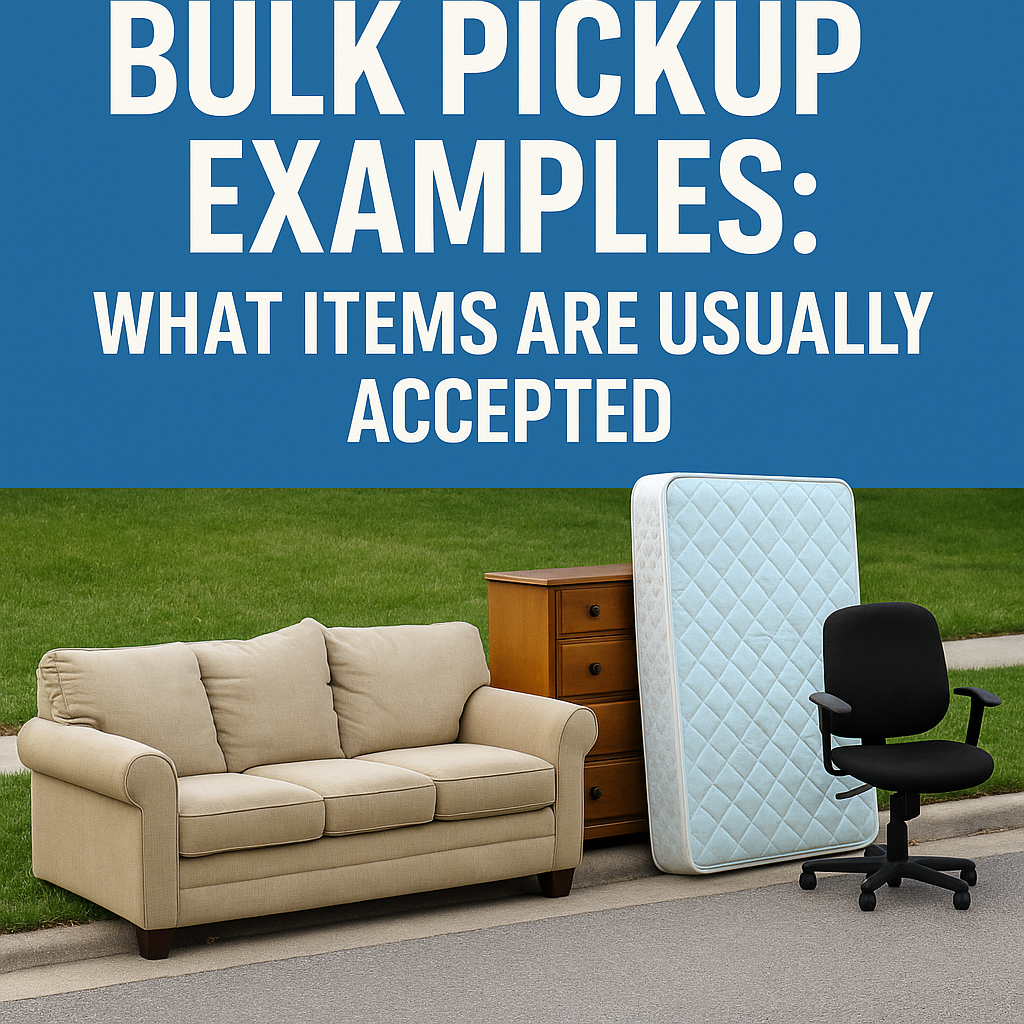
At some point, almost every home ends up with something that simply does not fit in a trash bin.
An old couch.
A broken mattress.
A damaged table.
A worn-out recliner.
A pile of construction debris.
You drag it outside, look at it, and then comes the big question:
“Does my city take this for free… or do I have to pay for it?”
The answer isn’t as simple as you’d like.
In some cities, bulk pickup is included in your regular service.
In others, you pay extra.
Sometimes it’s free only once or twice a year.
Other times, it’s always paid.
This guide will explain exactly how bulk pickup works in the U.S., what most cities charge, when it’s free, and — most importantly — when it’s actually worth paying for it.
First: What Is Considered “Bulk Pickup”?
Bulk pickup (also called bulky item collection or large item removal) refers to items that are too large or too heavy to go inside a standard trash bin.
Common bulk items include:
- Sofas and couches
- Mattresses and box springs
- Tables and desks
- Broken appliances
- Bookcases
- Large rugs
- Wardrobes
- Old TVs
- Exercise equipment
If something doesn’t fit in your bin or is too heavy for one person to lift, it’s probably considered bulk waste.
The 3 Most Common Bulk Pickup Systems
In the U.S., cities usually follow one of these three systems:
1. Free Scheduled Bulk Pickup (Included Service)
Some cities offer free bulk pickup, but only under specific conditions, such as:
- Once per month
- Once per quarter
- A certain number of items (2–5 max)
- Only residential (not businesses)
- Requires advance scheduling
In this system, you usually must:
- Book online or by phone
- Leave items on the curb on a specific day
- Follow strict preparation rules
If you miss your scheduled day, you often must wait until the next available date.
2. Paid Bulk Pickup (On-Demand)
Many cities — especially larger ones — charge a fee for bulk pickup.
Why?
Because these items require:
- Special trucks
- Extra workers
- Different disposal methods
Typical prices in 2025 look like this:
| Item | Average Price |
|---|---|
| Mattress | $15–$40 |
| Couch | $25–$75 |
| Refrigerator | $30–$100 |
| TV | $15–$50 |
| Multiple items | $50–$150+ |
The exact price depends on:
- Your city
- The size of the item
- Whether it contains hazardous materials
- Distance and accessibility
Some cities offer discounts for low-income households or seniors.
3. Annual Free Cleanup Events
Some cities do not offer regular bulk pickup at all. Instead, they organize:
- Annual clean-up days
- Community bulk drop-off events
- Spring or fall cleanup weeks
During these special windows, residents can:
✅ Place bulk items at the curb
✅ Drop them off at a city site
✅ Dispose of large waste for free
These events normally occur once or twice a year and are extremely popular.
The downside? If you miss it, you wait another year.
When Free Bulk Pickup Is Worth It
If your city offers free bulk pickup, it is 100% worth using if:
✅ You are not in a rush
✅ Your items fit the city’s rules
✅ You can wait for the next scheduled day
✅ The items are accepted
✅ You don’t have too many
For example, if you’re doing light decluttering — one old chair and a small desk — the free option is perfect.
You just need patience and planning.
When Paying for Bulk Pickup Makes More Sense
Sometimes, paying for bulk pickup is actually the smarter choice.
It’s usually worth paying if:
✅ You are on a tight schedule
✅ You’re selling a house
✅ You’re moving out
✅ You’re doing renovations
✅ You have many large items
✅ You cannot transport the items yourself
If your couch is blocking a walkway or your old mattress is soaking in the rain, waiting weeks for a free pickup might cause more problems than the small fee would.
In that case, speed is worth money.
Bulk Pickup vs Drop-Off Centers
If you’re trying to avoid paying but don’t want to wait, there is a middle option:
Drop-off locations
Many cities have waste centers where residents can bring:
- Furniture
- Scrap metal
- Appliances
- Yard waste
- Renovation debris
Sometimes it’s free for residents.
Other times it costs a small fee per load.
If you have access to:
- A truck
- A trailer
- A strong friend 😄
…then taking the waste yourself can be the cheapest option.
This works especially well for people doing large clean-outs or landscaping, which connects to:
👉 /how-to-dispose-of-yard-and-garden-waste
Why Bulk Items Are Often Left Behind
A very common mistake people make is placing bulky items next to their trash bin and assuming the normal truck will take it.
This almost never works.
Bulk items:
❌ Are not lifted automatically
❌ Are not part of normal routes
❌ Must be scheduled or prepared
❌ Require a special vehicle
So they are usually left on the curb, leading to frustration and confusion.
How To Prepare Bulk Items the Right Way
This step is extremely important.
Regardless of whether your pickup is free or paid, most cities require items to be:
✅ Empty (no belongings inside)
✅ Broken down if possible
✅ Placed next to the curb
✅ Not blocking sidewalks or roads
✅ Accessible for pickup
Some items also require:
- Mattress wrapping
- Appliance doors removed
- Hazardous parts removed (like refrigerant)
Failure to prepare items can cause pickup to be denied.
Can You Leave Bulk Items Out Overnight?
This depends on your city, but in general:
- Many cities allow items to be placed the night before
- Some only allow placement on the day of pickup
- Others allow a 24–48 hour window
Leaving items out too early can:
- Break local codes
- Lead to fines
- Encourage illegal dumping
- Attract pests
What Happens to Bulk Items After Pickup?
Ever wondered where your old couch actually goes?
Bulk items are usually:
- Broken down
- Separated by material
- Metal is recycled
- Wood is processed
- Mattresses are dismantled
- Some items are donated
- Others go to landfill
Believe it or not, many bulk items are 95% recyclable when handled correctly.
That’s why proper disposal is so important.
Smart Alternatives to Bulk Pickup
Before you even schedule or pay for pickup, consider:
✅ Donating to a local charity
✅ Giving it away online
✅ Selling it for cheap
✅ Giving it to a neighbor
✅ Posting “Free – Pick Up” ads
Many people don’t realize how fast items disappear when they’re listed online for free.
Sometimes, bulk waste isn’t waste at all — it’s just unwanted by you.
Real-Life Scenario
You’re replacing a couch and mattress on the same week.
Option 1: Free city service
→ Next available date: 3 weeks
Option 2: Paid pickup
→ Available: Tomorrow
→ Cost: $65
If you are:
- Moving out
- Having guests
- Selling your home
- Doing renovation
Then that $65 just saved you stress, space, and time.
That’s when paid pickup is absolutely worth it.
Final Thoughts
Bulk pickup only feels confusing because no one ever explained it clearly before.
Now you know:
✅ When it’s free
✅ When it’s paid
✅ What it costs
✅ When it’s worth it
✅ What options you really have
Whether you choose to use free pickup, paid service, or drop-off centers, the important thing is doing it the right way — for you, your home, and your community.