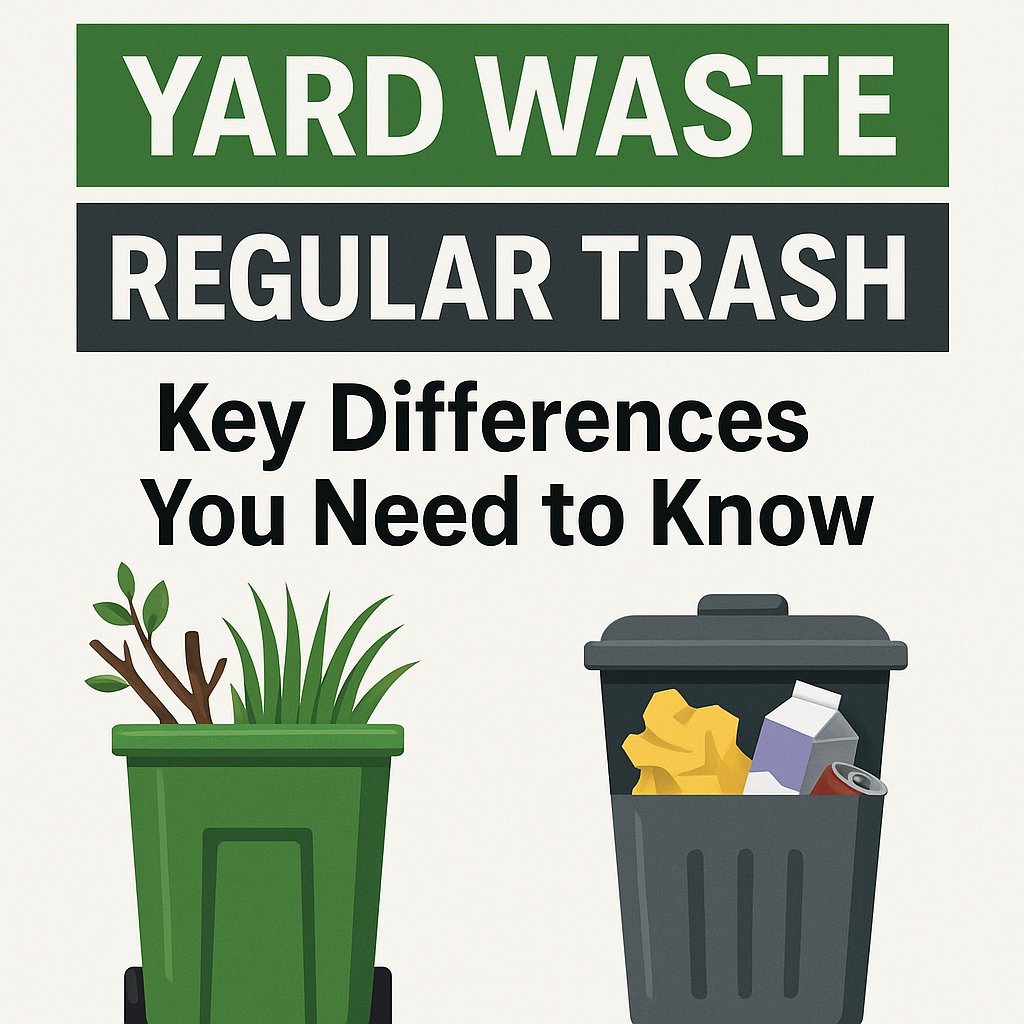
There is something satisfying about a freshly cut lawn, trimmed hedges, and a clean garden. But as soon as the work is done, a new problem appears:
What should you actually do with all the grass, leaves, bushes, and branches?
A surprisingly large number of people get this part wrong.
They either:
- Throw yard waste in the trash
- Mix it into recycling
- Leave it in piles
- Burn it (which is often illegal)
- Or dump it somewhere it doesn’t belong
And while it might not seem like a big deal at first, improper disposal of yard waste is one of the most common reasons for fines, rejected bins, and environmental damage in the U.S.
This guide will walk you through exactly how to dispose of lawn and garden waste correctly, step by step, in a simple, clear, and practical way.
What Is Considered Yard Waste?
Yard waste (also called green waste or garden waste) usually includes:
- Grass clippings
- Leaves
- Small branches
- Tree trimmings
- Hedge clippings
- Dead plants
- Weeds (without invasive roots)
- Garden flowers and debris
These are natural materials, but that does NOT mean they belong in your trash or recycling bin.
They follow a completely different system.
Why Yard Waste Is Separated From Trash and Recycling
Yard waste is handled separately for two main reasons:
- It can be composted
- It can become mulch or fertilizer
Instead of being buried in a landfill, many cities turn yard waste into something useful for:
- Parks
- Farms
- Community gardens
- Landscaping projects
When you mix yard waste with trash or recycling, you ruin that process.
Even worse:
You may get your bin rejected.
How Most Cities Handle Yard Waste
Depending on where you live, your city will handle yard waste in one of these ways:
✅ Separate Green Bin
Many cities provide a green bin specifically for yard waste.
This bin is collected:
- Weekly
- Bi-weekly
or - On the same day as trash
Only yard materials go in here.
No food. No plastic. No soil.
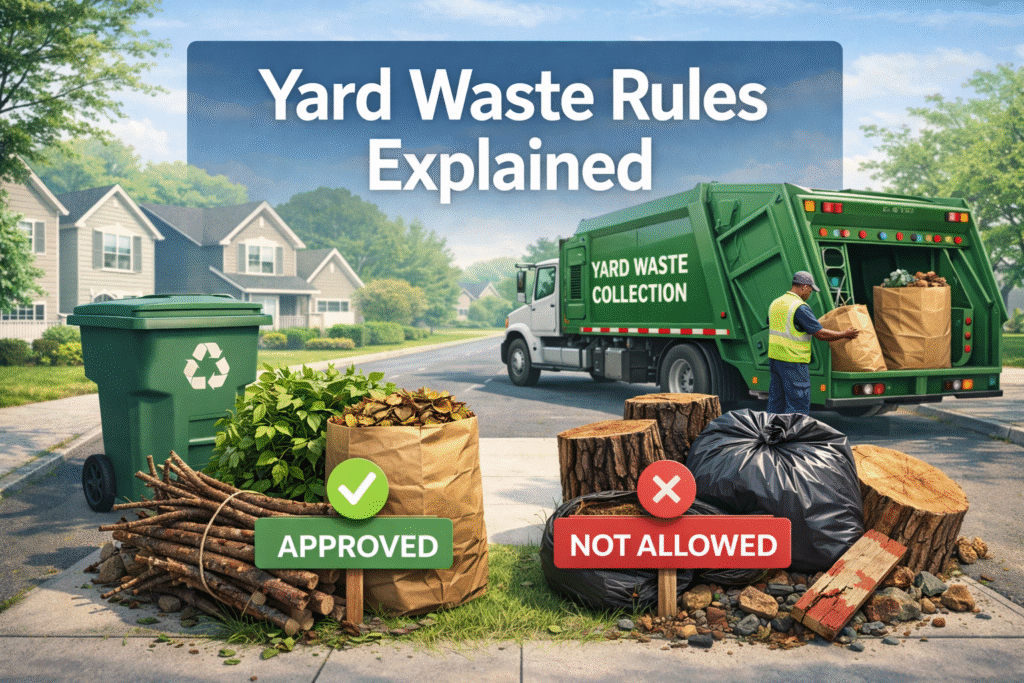
✅ Paper Yard Waste Bags
If you don’t have a green bin, your city may require:
- Brown paper bags
- Special biodegradable bags
- Tied bundles for branches
Plastic bags are usually not allowed, because they cannot be composted.
✅ Scheduled Yard Waste Pickup Days
Some cities only collect yard waste:
- Certain months of the year
- On specific days
- During certain seasons (spring/fall)
This method works for yard waste too.
What Does NOT Belong in Yard Waste
This is extremely important.
Even though something comes from outside, it does not always belong in yard waste.
Do NOT include:
- Dirt / soil
- Rocks / gravel
- Animal waste
- Pressure-treated wood
- Construction materials
- Plastic pots
- Garden hoses
- Fertilizer bags
- Landscape fabric
These items can contaminate the entire load and cause rejection.
What About Big Branches and Trees?
When large branches or whole trees are cut down, that usually becomes bulk waste, not yard waste.
This is especially true if:
- The branch is thick
- The pile is heavy
- It cannot fit in a bin
- It must be bundled
In this case, you should use your city’s bulk pickup service, not the yard waste system.
The Big Mistake: Mixing Yard Waste With Recycling
This happens all the time.
People think:
“It’s natural, so it must be recyclable.”
Unfortunately, it doesn’t work like that.
When grass and leaves are mixed into recycling bins, they:
- Contaminate paper
- Ruin cardboard
- Affect plastic sorting
- Create moisture damage
This almost always leads to a rejected bin.
Seasonal Yard Waste Challenges
The amount of yard waste changes a lot during the year.
🍁 Fall
- Leaves everywhere
- Heavy volume
- Often extra pickup days offered
🌸 Spring
- Trimming season
- Clean-up after winter
- Increased bag use
☀️ Summer
- Regular grass clippings
- Hedge trimming
- More moisture
❄️ Winter
- Almost no yard waste (in many cities)
- Some programs shut down temporarily
Some cities only collect yard waste April–November.
Can You Just Compost It Yourself?
Absolutely — and it’s actually one of the best options.
If you have:
- A backyard
- Space
- A small garden
- Or even a compost bin
You can compost:
- Leaves
- Small branches
- Grass (in moderation)
- Plant waste
This turns into free, rich soil that can be used in your own garden.
This is both eco-friendly and cost-effective.
Many people don’t realize they can reduce their waste by up to 30% just by composting.
What To Do If Yard Waste Was NOT Picked Up
If you put your yard waste out correctly and nothing happened, the most common reasons are:
- Wrong collection day
- Wrong type of bag
- Too heavy
- Mixed with non-allowed items
- Not bundled properly
The same principles apply.
Yard Waste vs Bulk Waste vs Regular Trash
Here’s a simple breakdown:
| Type | Example | Goes where |
|---|---|---|
| Grass & leaves | Lawn, rakes | Yard waste |
| Tree branch | Large/heavy | Bulk pickup |
| Food scraps | Kitchen | Regular trash |
| Cardboard | Boxes | Recycling |
| Old furniture | Sofa, chair | Bulk pickup |
Once this clicks, everything becomes easier.
Simple Yard Waste Checklist (Save This)
Before placing your yard waste out, check:
✅ Only natural materials
✅ No soil or rocks
✅ No plastic or trash
✅ Bags are approved type
✅ Bundles are tied
✅ Placed on correct day
✅ Not blocking sidewalks
If all of these are good, you’re doing it right.
Final Thoughts
Most people care about their yard. They work hard to keep it clean and beautiful. But then, without realizing it, they throw all of that work into the wrong bin.
Knowing how to dispose of yard waste the right way:
- Keeps your property clean
- Helps your city recycle properly
- Protects the environment
- Saves you from fines
- And makes your neighborhood better
You’re not just cutting grass…
You’re managing waste like a pro.