One of the most common questions people ask after moving to a new home in the United States is surprisingly simple:
“How often does the trash get picked up here?”
You’d think there would be a standard answer. Once a week, right? But the reality is more complex than that. In the U.S., trash collection schedules can vary significantly depending on the state, city, neighborhood, building type, and even the season.
Some homes get service twice a week. Others only once. Some apartment complexes have shared dumpsters emptied daily. Rural areas might only see a truck once every two weeks.
Understanding how often trash is collected in your city helps you:
- Avoid overflowing bins
- Prevent bad smells and pests
- Keep your street clean
- Avoid fines or missed pickups
- Plan bulk and yard waste correctly
This guide will help you understand the most common trash pickup frequencies in the U.S. and how to find the exact answer for your address.
Why Trash Pickup Frequency Is Not The Same Everywhere
Unlike many countries, the U.S. does not have a single national system for waste collection. Instead, it’s handled by:
- City governments
- County governments
- Private waste management companies
- HOAs or apartment management
This means that even within the same city, you could have:
- One neighborhood with twice-per-week collection
- Another with weekly collection
- An apartment complex with daily service
- A gated community with private pickup
That’s why it’s always important to confirm your own schedule instead of copying your neighbor’s routine.
It shows you where and how to find your exact pickup days based on your address.
The Most Common Trash Pickup Schedules in the U.S.
Here’s how it usually works in most American cities:
✅ Once Per Week (Most Common)
This is by far the most common schedule in suburban and residential areas. One pickup per week is considered sufficient for an average household.
- Used in many cities across Texas, Florida, Georgia, Arizona, and the Midwest
- Often paired with recycling every other week
- Usually happens in the early morning
This system works well for families that don’t produce excessive waste and follow recycling rules correctly.
✅ Twice Per Week (Densely Populated Areas)
In more crowded areas, trash builds up faster. That’s why some cities offer two pickups per week.
This is common in:
- Major cities (New York, Los Angeles, Chicago)
- Downtown areas
- Commercial zones
- High-density housing
This helps prevent:
- Overflowing bins
- Bad odors in summer
- Increased rodent activity
If you’re lucky enough to have twice-per-week pickup, make sure to still follow the correct bin rules.
✅ Every Two Weeks (Less Common)
Some rural or low-density areas have pickup every 14 days instead of weekly.
This is usually done to:
- Reduce operational costs
- Match lower waste production
- Support composting and recycling efforts
In these areas, it’s even more important to use recycling and yard waste services properly.
✅ Apartment & Condo Complex Pickups
If you live in an apartment or condo, your building may have:
- Multiple large dumpsters
- Daily or semi-daily trash service
- A private waste contract
- No curbside bins
In this case, your trash does not necessarily follow the city’s residential schedule. It follows your building’s contract instead.
Always ask your property manager for the exact schedule.
What Influences Your Trash Pickup Frequency?
Several things affect how often your trash is collected:
1. Population Density
The more people in an area, the more waste is created, and the more often it must be collected.
2. Climate
Hotter climates (like Arizona, Texas, Florida, Nevada) often require more frequent pickup to prevent odors, insects and health problems.
3. City Budget
Trash collection is expensive. Cities adjust pick-up frequency based on budget and resources.
4. Recycling Levels
Communities that recycle properly usually need less frequent trash collection.
Seasonal Changes in Trash Collection
Another thing people don’t realize is that trash schedules can change depending on the season.
Summer
- Trash can smell faster
- Insects increase
- Some cities provide extra collections
Fall
- Increase in yard waste
- Extra leaf collection programs
- More debris from storms
Winter
- Some routes reduced
- Weather delays more common
After Holidays
Trash volume spikes dramatically after:
- Thanksgiving
- Christmas
- New Year’s
- 4th of July
During these times, many cities experience delays.
What Happens If You Put Trash Out on the Wrong Day?
If you put your bin out on the wrong day, a few things can happen:
- The truck is already gone
- Your bin stays full all week
- Neighbors may complain
- The city may issue a warning
- You may attract animals
Over time, repeated mistakes can even result in fines.
That’s why it’s important to know exactly when your street is scheduled.
The Best Time to Put Your Bin Out
In most U.S. cities, the recommended time is:
✅ The evening before pickup day
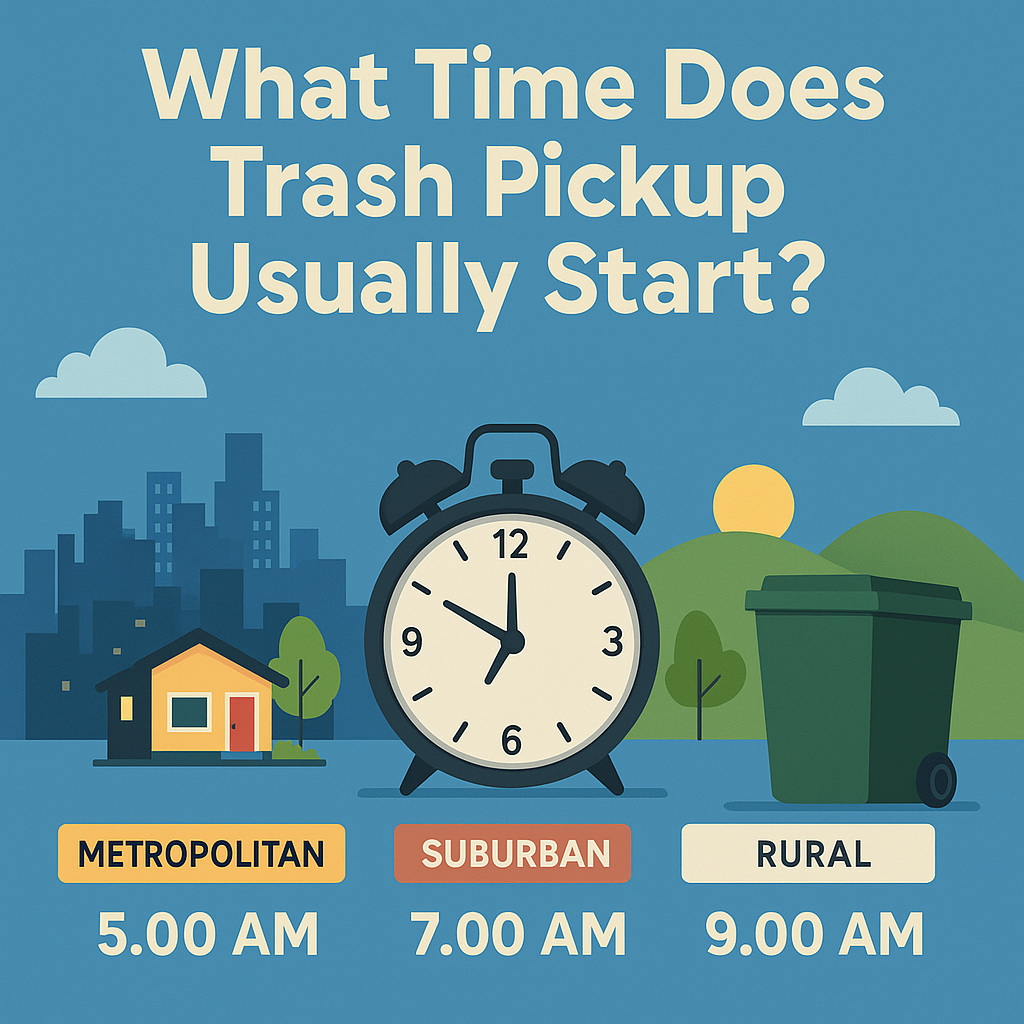
Collection trucks often start between:
- 5:00 AM
- 7:00 AM
If you wait until the morning, you might miss it.
Best practice:
Set a reminder on your phone for 7:00 – 8:00 PM the night before.
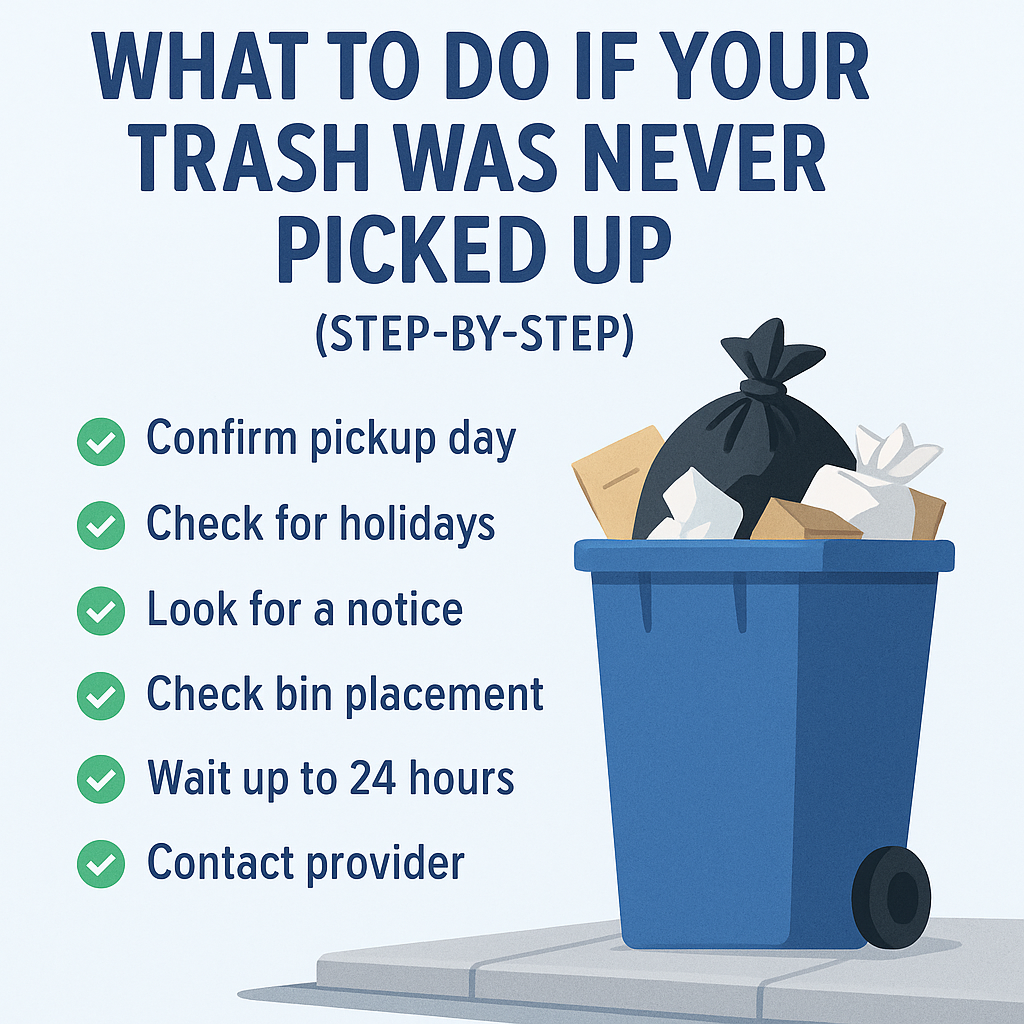
What If Your Trash Was Missed?
If your trash was supposed to be picked up but wasn’t, don’t panic. This is more common than people think.
Possible reasons:
- The truck was full
- A car blocked the bin
- Severe weather
- Staff shortage
- Bin violation
It explains exactly who to contact and what to do to get it resolved fast.
Proper Bin Placement Matters
Even if it’s the right day, your bin can still be skipped if:
- It’s too close to a wall or mailbox
- It’s blocked by a car
- The lid is open or overloaded
- The opening is facing the wrong direction
- It contains unacceptable items
Most cities recommend:
- 2–3 feet away from other objects
- Facing the street
- Placed on flat ground
- With the lid fully closed
Following this simple rule dramatically increases successful pickup.
How Recycling & Trash Work Together
Trash frequency is closely connected to recycling habits.
If your home recycles properly:
- You reduce how fast your trash bin fills up
- You reduce smell
- You increase sustainability
Many cities assume that households recycle and set trash frequency accordingly.
If nobody recycled, cities would need double the pickups.
Summary – How Often Is Trash Picked Up in the U.S.?
Here’s your clear, simple answer:
- Most homes: Once per week
- Big cities: 1–2 times per week
- Rural areas: Every 2 weeks
- Apartments: Varies (daily/weekly)
But your exact answer depends on your location.
It only takes a minute and eliminates all the guesswork.
Final Thoughts
Trash collection might seem like a small detail, but it affects your:
- Health
- Comfort
- Neighborhood
- Environment
- Daily routine
Once you understand how often it happens and why it can change, everything becomes easier and more predictable.
And the next time someone asks you
“Hey, when is trash day again?”
You’ll actually have the answer.