
If you’ve ever stood in your kitchen holding an empty container, asking yourself “Is this trash or recycling?”, welcome to the club. This tiny moment of doubt happens in millions of homes every single day in the United States.
In theory, recycling sounds easy. In reality, it’s one of the most misunderstood systems in modern cities. Labels can be confusing. Rules change by location. And what was recyclable five years ago may not be accepted today.
In 2025, knowing what goes where isn’t just helpful — it’s essential. Putting the wrong item in the recycling bin can actually contaminate an entire truckload and turn all of it into trash.
This guide is going to make it simple. No technical jargon. No complicated city rules. Just clear, practical answers you can use immediately.
Why Getting It Right Matters More Than Ever in 2025
Recycling systems in the U.S. are under more pressure than ever before. Cities are dealing with:
- Higher waste volumes than in past decades
- Increased sorting costs
- Stricter contamination rules
- Limited landfill space
- New environmental regulations
In fact, many cities now reject entire recycling bins if they contain too many incorrect items. That means even if you put 90% recyclable materials, one or two wrong items could cause the entire bin to end up in a landfill.
Understanding the difference between trash and recycling isn’t just about being eco-friendly. It directly affects:
- City budgets
- Landfill levels
- Environmental impact
- Local collection rules
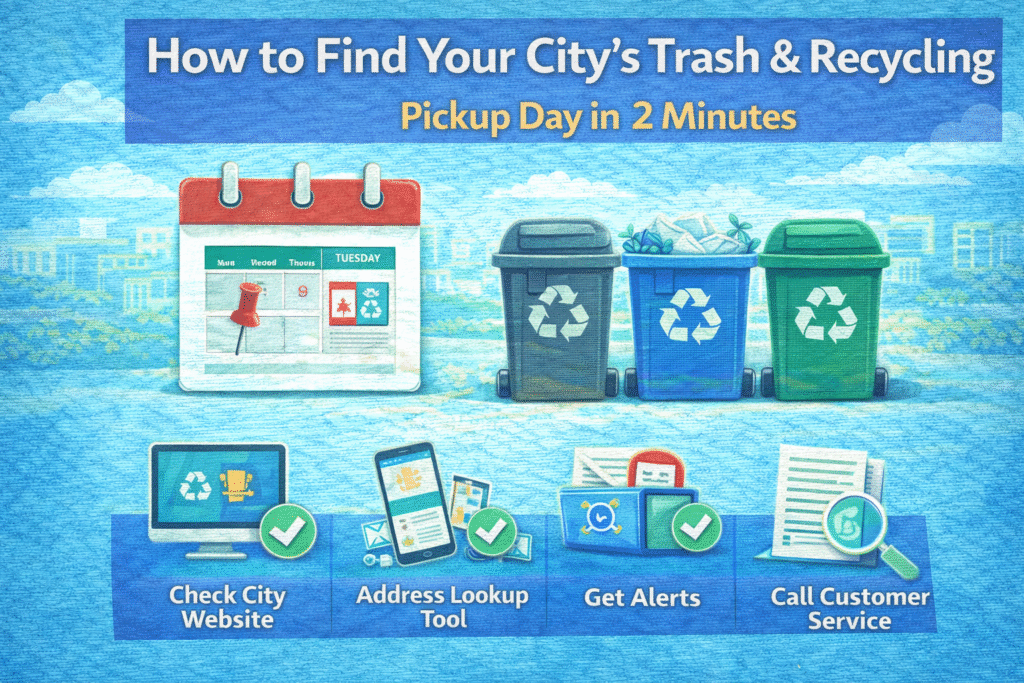
It will help you understand when and how often each bin is collected in your area.
The Golden Rule of Recycling
Here is the simplest rule to remember in 2025:
If it touched food or liquid and can’t be easily cleaned → it’s probably trash.
Many people assume “plastic = recycling” and “paper = recycling,” but that’s not how it works.
Condition matters more than material.
✅ Items That Usually Go in the Recycling Bin
In most U.S. cities, these items are accepted in the blue recycling bin:
Plastic (Rigid Only)
- Water bottles
- Soda bottles
- Milk jugs
- Shampoo bottles
- Food containers (clean)
Tip: Always rinse quickly. It doesn’t need to be perfect, just clean of major residue.
Paper Products
- Office paper
- Newspaper
- Magazines
- Non-glossy mail
- Homework and documents
However: if it’s wet or covered in food, it becomes trash.
Cardboard
- Shipping boxes
- Cereal boxes
- Paper towel tubes
- Shoe boxes
Always flatten large boxes to save space and avoid rejection.
Metal
- Aluminum cans
- Tin cans
- Clean foil (in some cities)
Rinse them to avoid odor and bugs.
Glass (Only in Some Cities)
- Bottles
- Jars
Not all cities accept glass due to processing challenges. Always check your local rules first.
❌ Items That Should ALWAYS Go in the Trash
These items commonly look recyclable… but they are not:
- Used paper towels & napkins
- Greasy pizza boxes (bottom part)
- Plastic bags
- Styrofoam containers
- Broken glass (dangerous)
- Diapers
- Tissues
- Food scraps
- Coffee cups (they contain plastic lining)
- Straws & plastic cutlery
One of the biggest mistakes in recycling is wish-cycling — throwing something in the bin hoping it can be recycled.
Unfortunately, that causes more harm than simply throwing it in the trash.
Where Does Yard Waste Fit in?
Yard waste is a completely separate system in many U.S. cities.
Items like:
- Grass clippings
- Leaves
- Small branches
- Garden debris
Usually go in a green bin or must be placed in brown paper yard bags.
Do NOT put yard waste in:
- Regular trash bin
- Recycling bin
This is one of the fastest ways to get your bin rejected.
Bulk Items Are NOT Trash OR Recycling
Large items such as:
- Mattresses
- Old couches
- Tables
- Appliances
- Carpets
Usually belong to “bulk pickup,” not your normal bins.
If you place these next to your trash bin, the truck will almost always leave them behind.
Most cities require:
- Scheduling a special pickup
- Placing items on a specific day
- Limiting how many items per month
Why Recycling Rules Are Getting Stricter
In the past, the U.S. used to export a lot of recyclable material overseas. With global regulations tightening, cities must now process more material locally.
This has created stricter standards like:
- No plastic bags in recycling
- No food-contaminated items
- No loose trash
- No mixed materials (multi-layer packaging)
It’s not that cities are trying to make it harder.
They are trying to make it actually work.
How to Create a Simple “Bin System” at Home
Want a foolproof setup in your house? Use this:
- One bin for trash (black)
- One bin for recycling (blue)
- Optional: small container for compost/food waste if supported
- Stick a simple list above the bins:
- “Food & dirty = TRASH”
- “Clean paper/plastic = RECYCLE”
This alone can improve recycling accuracy by over 50%.
What Happens If You Keep Getting It Wrong?
In many U.S. cities, repeated incorrect sorting can result in:
- Warning tags on your bins
- Collection refusal
- Fines
- Required re-education notices
This is becoming more common in places like California, New York, and Washington.
Frequently Confused Items (Quick Answers)
Let’s clear up some everyday confusion:
- Pizza box (greasy) → Trash
- Pizza box (clean top) → Recycle
- Plastic bags → Trash (or store drop-off)
- Coffee cup → Trash
- Foil wrapper (clean) → Recycle (in some cities)
- Teabags → Trash or compost
- Cardboard with grease → Trash
- Cereal bags inside box → Trash
- Glass mirror → Trash
- Broken plate → Trash
- Takeout container → Depends on material & cleanliness
If in doubt: Trash is safer than contaminating recycling.
The Easiest Way to Always Be Right
If you only remember three things, remember this:
- Clean = possible recycle
- Dirty = trash
- Big = bulk pickup
This is exactly why this site exists: to make all this easy for you.
Final Thoughts
In 2025, recycling is less about guessing and more about simple awareness.
You don’t have to be perfect. You just have to be informed.
By following the guidelines in this article, you’re already doing more than most households in your city.
And every correctly sorted item truly makes a difference.
Pingback: Paper, Cardboard & Glass Recycling: The Correct Way to Do It - Trash Pickup Schedule Day
Pingback: How to Recycle Properly in the U.S.: A Beginner’s Guide - Trash Pickup Schedule Day
Pingback: How to Reduce Household Trash by 50% Without Changing Your Lifestyle - Trash Pickup Schedule Day