Recycling Symbols 1–7 Explained
Ever turned a plastic container around and noticed a triangle with a number inside? That’s a recycling symbol — but those numbers don’t always mean what people think.
If you’ve ever wondered what the difference is between #1 and #7 plastics, or why some are recyclable in your city and others aren’t, you’re not alone. In this guide, we’ll decode what each recycling number actually means, how to tell what’s accepted in your area, and what you can do to recycle smarter.
♻️ Understanding Recycling Numbers
The chasing-arrows symbol you see on bottles and containers is officially called the Resin Identification Code (RIC).
It identifies the type of plastic resin used, not necessarily whether the item is recyclable everywhere.
Each number (1–7) stands for a specific kind of plastic with unique properties — some are easy to recycle, others aren’t.
🔢 Plastics #1–#7 Explained
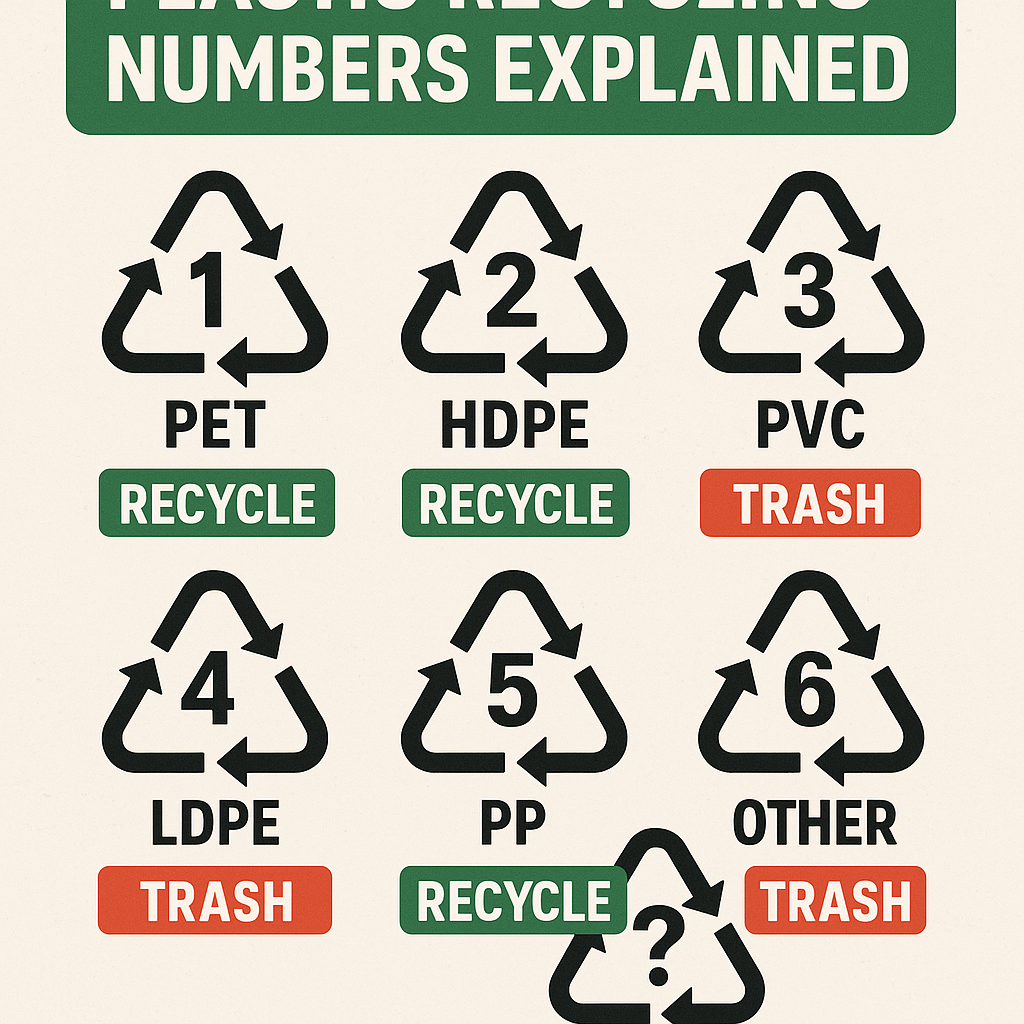
#1 – PET or PETE (Polyethylene Terephthalate)
- Found in: water bottles, soda bottles, clear food packaging.
- Recyclable: ✅ Highly recyclable in most curbside programs.
- Tips: Rinse bottles and remove caps before recycling.
PET plastics are turned into new bottles, clothing fibers, and carpet materials.
#2 – HDPE (High-Density Polyethylene)
- Found in: milk jugs, detergent bottles, shampoo containers.
- Recyclable: ✅ Yes, accepted almost everywhere.
- Why it matters: Strong, durable, and one of the most recycled plastics.
HDPE is often made into new containers, plastic lumber, and outdoor furniture.
#3 – PVC (Polyvinyl Chloride)
- Found in: plumbing pipes, vinyl flooring, some clear packaging.
- Recyclable: ❌ Rarely accepted curbside.
- Hazards: Contains additives and chlorine that make it difficult to recycle safely.
PVC should go to specialized recycling centers or be reused when possible.
#4 – LDPE (Low-Density Polyethylene)
- Found in: grocery bags, bread bags, squeezable bottles, bubble wrap.
- Recyclable: ♻️ Sometimes — accepted at drop-off locations, not curbside.
- Tip: Many grocery stores have LDPE collection bins for clean plastic bags.
Avoid putting plastic films in curbside bins — they jam sorting machines.
#5 – PP (Polypropylene)
- Found in: yogurt cups, straws, medicine bottles, caps.
- Recyclable: ✅ Increasingly accepted as technology improves.
- Tip: Check locally — some facilities now recycle #5 plastics separately.
PP is often turned into storage bins, brushes, and battery cases.
#6 – PS (Polystyrene or Styrofoam)
- Found in: disposable cups, plates, egg cartons, packing peanuts.
- Recyclable: ❌ Difficult and rarely accepted.
- Why: Lightweight and costly to transport; better to avoid when possible.
If your city accepts it, make sure it’s clean and free from food residue.
#7 – Other (Mixed Plastics, Polycarbonate, PLA)
- Found in: baby bottles, large water jugs, some biodegradable plastics.
- Recyclable: ⚠️ Depends on local facilities.
- Note: “Compostable” plastics (#7 PLA) must go to industrial composting, not recycling bins.
Always read the label — “biodegradable” doesn’t mean recyclable.
🗑️ What’s Commonly Accepted Curbside
Most U.S. curbside programs accept only:
- #1 (PET) bottles and jars
- #2 (HDPE) containers
- #5 (PP) in select areas
Everything else — films, styrofoam, PVC — must go to drop-off points or be reused.
To confirm what’s accepted, search for your city here:
👉 Find Your City’s Recycling Rules.
🚫 Contaminants to Avoid
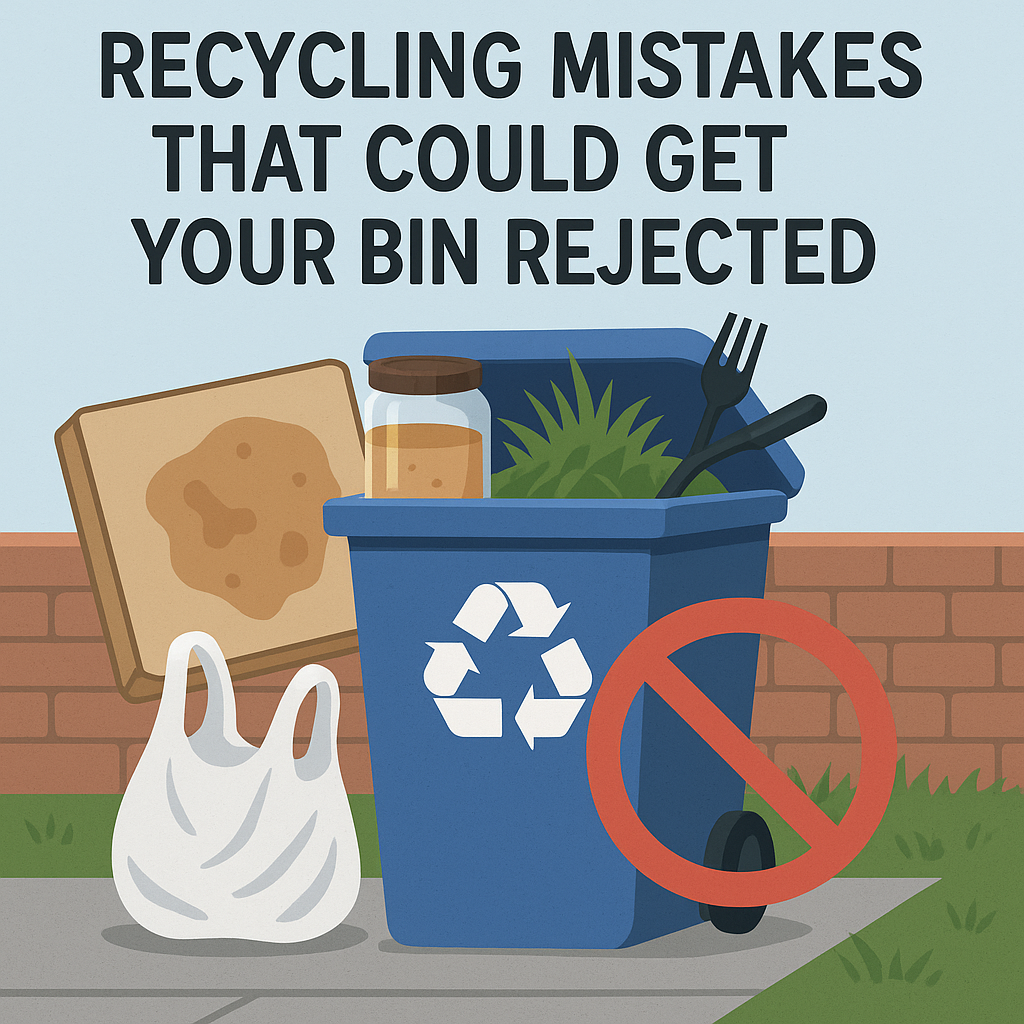
Contamination is the #1 reason recyclables end up in landfills. Keep your bin clean by following these rules:
- Rinse containers to remove food or liquids.
- No greasy pizza boxes.
- No plastic bags or films in curbside bins.
- Don’t recycle items smaller than a credit card.
Even small contaminants can ruin an entire batch of recyclable materials.
🌎 Local Recycling Rules Matter
Recycling programs differ widely by city. For example:
- San Diego accepts #1–#7 plastics.
- Houston only takes #1, #2, and #5.
- New York City separates rigid plastics from film plastics entirely.
That’s why checking your local rules is crucial — visit your city’s solid waste site or use TrashPickupScheduleDay.com to find the latest info.
💡 Smart Recycling Tips
- Keep caps on bottles (if your city allows) — newer facilities can separate them efficiently.
- Crush plastic bottles to save space, but not aluminum cans (they’re scanned by shape).
- Avoid black plastics — sorting scanners can’t detect them, so they often end up in landfills.
- Recycle clean, dry, and empty items only.
- Choose reusable containers whenever possible to reduce plastic waste altogether.
🌱 Why Recycling Symbols Still Matter
Even though not every item with a recycling triangle can be recycled, these symbols serve an important purpose:
- They help manufacturers standardize labeling.
- They make it easier for you to identify materials.
- They educate consumers about plastic diversity and encourage better choices.
Understanding what those numbers mean empowers you to recycle smarter — not just more.
🏙️ What Happens After Recycling
Once collected, your recyclables go through a materials recovery facility (MRF), where machines and workers:
- Sort items by material type (plastic, glass, paper).
- Shred and wash plastics.
- Melt them into pellets for reuse in new products.
When recycling is done right, it supports local jobs, saves energy, and reduces pollution.
🧩 Beyond the Bin: Reuse & Upcycling
If your local facility doesn’t accept certain plastics, get creative:
- Use #5 yogurt cups as small planters.
- Reuse #4 bags for pet waste or packing.
- Donate sturdy containers to schools or art studios.
Small actions like these keep materials in use longer and out of landfills.
❓ Frequently Asked Questions
Can I recycle bottle caps and lids?
Yes — if they’re plastic and your city accepts them. Keep caps on bottles unless local rules say otherwise.
Are black plastic trays recyclable?
Usually not. Optical sorters can’t detect black plastic, so it’s best to avoid them.
Can I recycle biodegradable or compostable plastics?
No. Compostable plastics (#7 PLA) need special facilities and shouldn’t go in curbside bins.
Should I remove labels before recycling?
Not necessary — modern recycling plants can handle paper labels during washing.
📣 Final Call-to-Action
Not sure what your city accepts?
👉 Find Your City’s Recycling Rules
Get accurate information by entering your ZIP code — and start recycling smarter today.